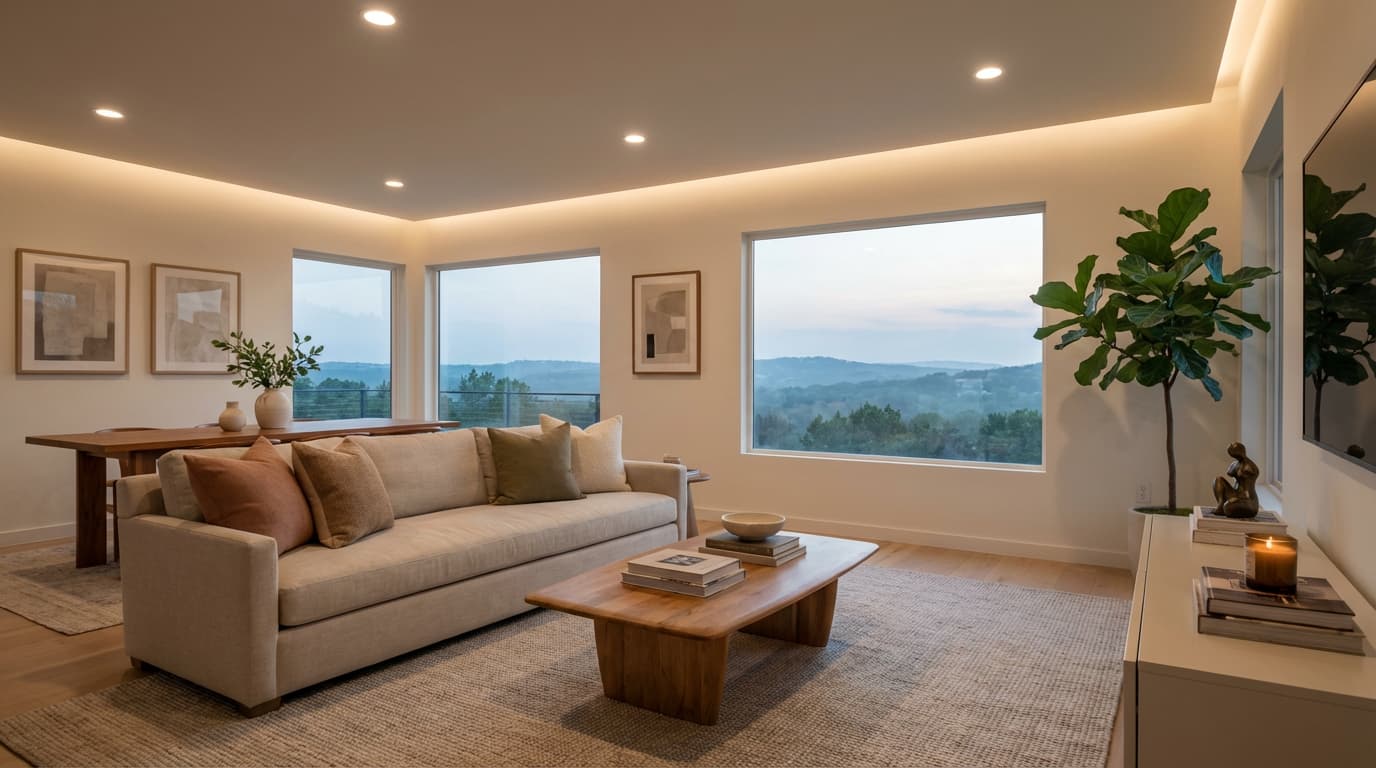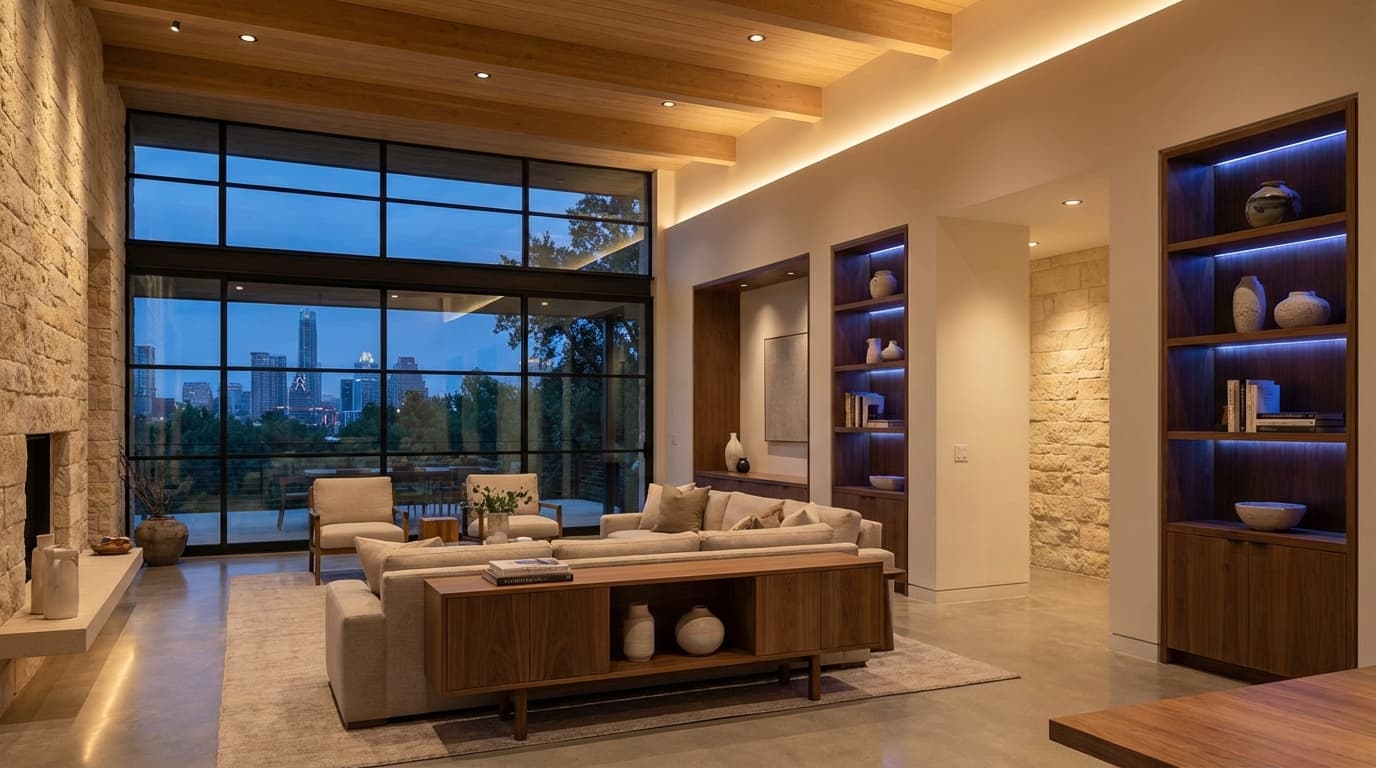

Transform your home's vibe with lighting that adapts to your routine, your activities, and how you actually want to feel
You know that feeling when you walk into a room and something just feels off? The lights are on, you can see perfectly fine, but the space doesn't match your energy. Maybe you're trying to unwind after a long day in Austin traffic, but your living room feels like a hospital waiting room. Or you're tackling a work project from home, but your office lighting has all the focus-boosting power of a candle in a cave.
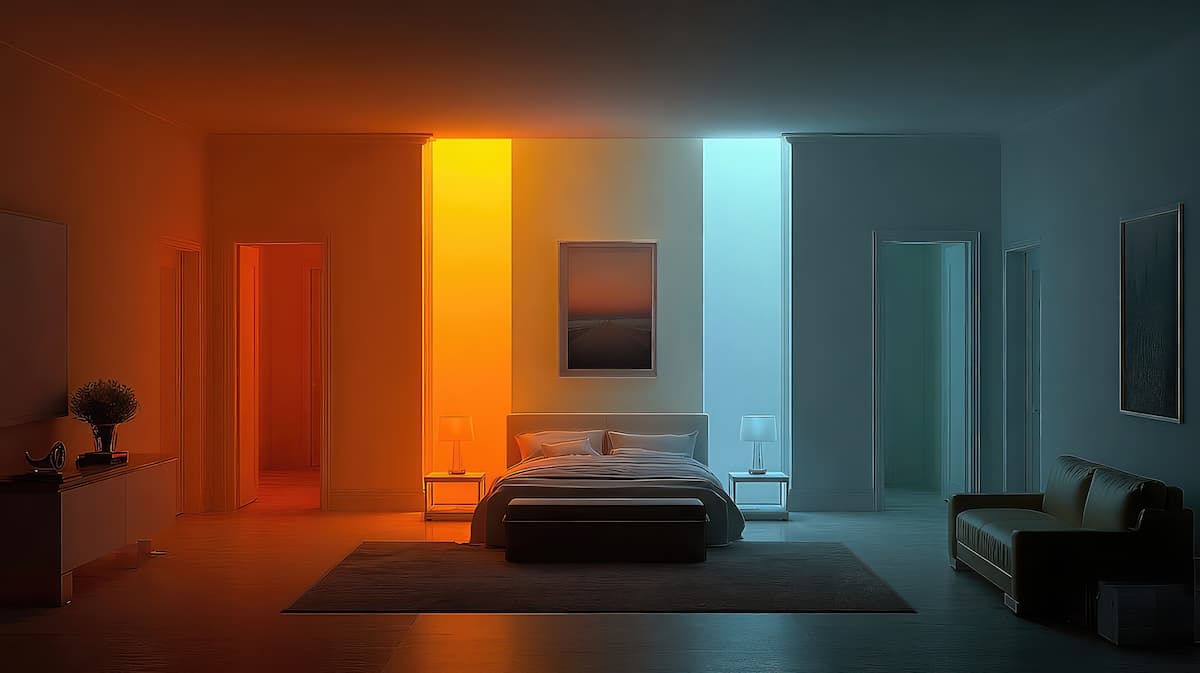
Here's the truth most homeowners never learn: your brain responds to light color the same way it responds to actual colors in your environment. Warm amber tones tell your nervous system it's time to relax. Cool blue-enriched light signals "stay alert, things are happening." This isn't design preference—it's neuroscience.
At Radiant Spaces, we help Austin homeowners create lighting that actually works with their lives instead of against them. And it starts with understanding the psychology behind the colors illuminating your space.
Quick wins: color temperature at a glance
Before we dive deep, here's your cheat sheet for immediate impact:
- 2700K or lower (soft, warm amber) — Relaxation and sleep. Your evening living room, bedroom, and wind-down vibe.
- 3000K (warm white) — Everyday comfort. Perfect for dining rooms, casual entertaining, and general Austin living.
- 4000-5000K (neutral to cool white) — Focus and productivity. Ideal for home offices during work hours.
- 5000-6500K (daylight) — Morning energy. Helps you wake up alert—especially
- during those dark Central Texas winter mornings.
Want a printable version of this breakdown? Download our free Color Temperature Cheat Sheet — a room-by-room guide to choosing the right Kelvin range for every space.
Warm versus cool: when each delivers the strongest emotional impact
The color of your light directly controls your brain chemistry. Specialized cells in your eyes detect blue light around 480 nanometers and send signals straight to your brain's master clock. The result? Cool, blue-enriched light suppresses melatonin and triggers alertness hormones. Warm amber tones do the opposite—they allow melatonin production and help your body prepare for rest.
Research backs this up with striking numbers. Workers under cool lighting (5000K) show 12% faster task completion and 19% fewer errors. Meanwhile, warm lighting boosts creative output by 23% according to Lighting Research Center studies.
Environmental psychologist Dr. Sally Augustin puts it perfectly: "Warm lights are great for creating a cozy, relaxing atmosphere—one where we have a good time socializing and are apt to think more creatively. Cool lights are best for times when we need to feel alert or really concentrate. Do your taxes in cool light, write poetry and hang out with friends in warmer light."
For Austin homeowners, this means your home office needs different lighting than your backyard patio entertaining space. The vibe you want for Sunday morning coffee is completely different from the energy you need for Monday's video calls. Intentional lighting honors those differences.
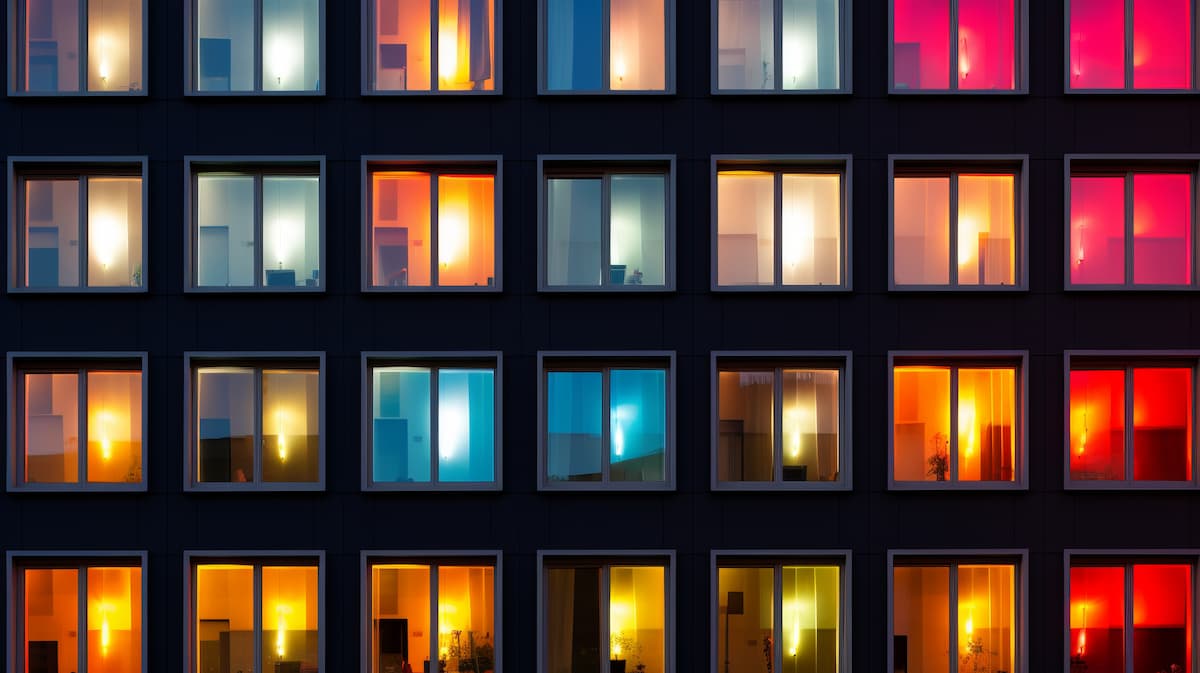
How RGB and color-changing lights support different moods
Beyond white light variations, saturated colors carry their own psychological weight. Blue tones at specific wavelengths suppress melatonin by 50% within fifteen minutes, according to Harvard Medical School research. Morning blue-enriched light exposure leads to 15% better cognitive performance and 25% less afternoon fatigue.
For relaxation and sleep preparation, red and amber lights shine. A study published in the Journal of Athletic Training found that participants using red light for thirty minutes nightly experienced improved sleep quality, melatonin levels, and next-day performance. Red and amber tones don't trigger your alertness receptors at all, making them perfect for evening use.
Here's the nuance worth knowing: medium-saturation warm-colored lights generate positive moods—feelings of energy, satisfaction, and romance. High-saturation lighting, however, tends to induce tension and nervousness. So those vibrant party colors are great for short-term entertaining at your next Austin house party, but daily living calls for more subtle, tunable approaches.
Creating lighting scenes for every moment of your day
The real magic happens when you stop thinking about rooms and start thinking about moments. Smart lighting lets you create "scenes" that transform your space with a single tap or voice command.
Morning energy (6-9 AM): Program your bedroom and kitchen lights to gradually brighten with cool, blue-enriched tones (5000-6500K) starting thirty minutes before you want to wake. This simulates sunrise and helps suppress melatonin naturally—a game-changer during those darker Austin winter months.
Work focus (9 AM-4 PM): Your home office shifts to neutral-cool lighting around 4000-5000K. This maximizes alertness and concentration. When the workday ends, the color shift itself becomes a psychological boundary—your brain recognizes the lighting change as a signal to transition out of work mode.
Evening wind-down (5-9 PM): Living spaces transition to warm white (2700-3000K). This is your time for family dinner, catching up on the couch, or hosting friends on the patio as the Texas sun sets.
Pre-sleep relaxation (9 PM-bedtime): Dim everything to candlelight warmth (1800-2200K) or amber tones. User testimonials describe this as "life-changing"—people who struggled with insomnia report falling asleep faster and waking more refreshed after implementing sunset-style routines.
Our Color Temperature Cheat Sheet maps these ranges to specific rooms so you can apply this throughout your home.
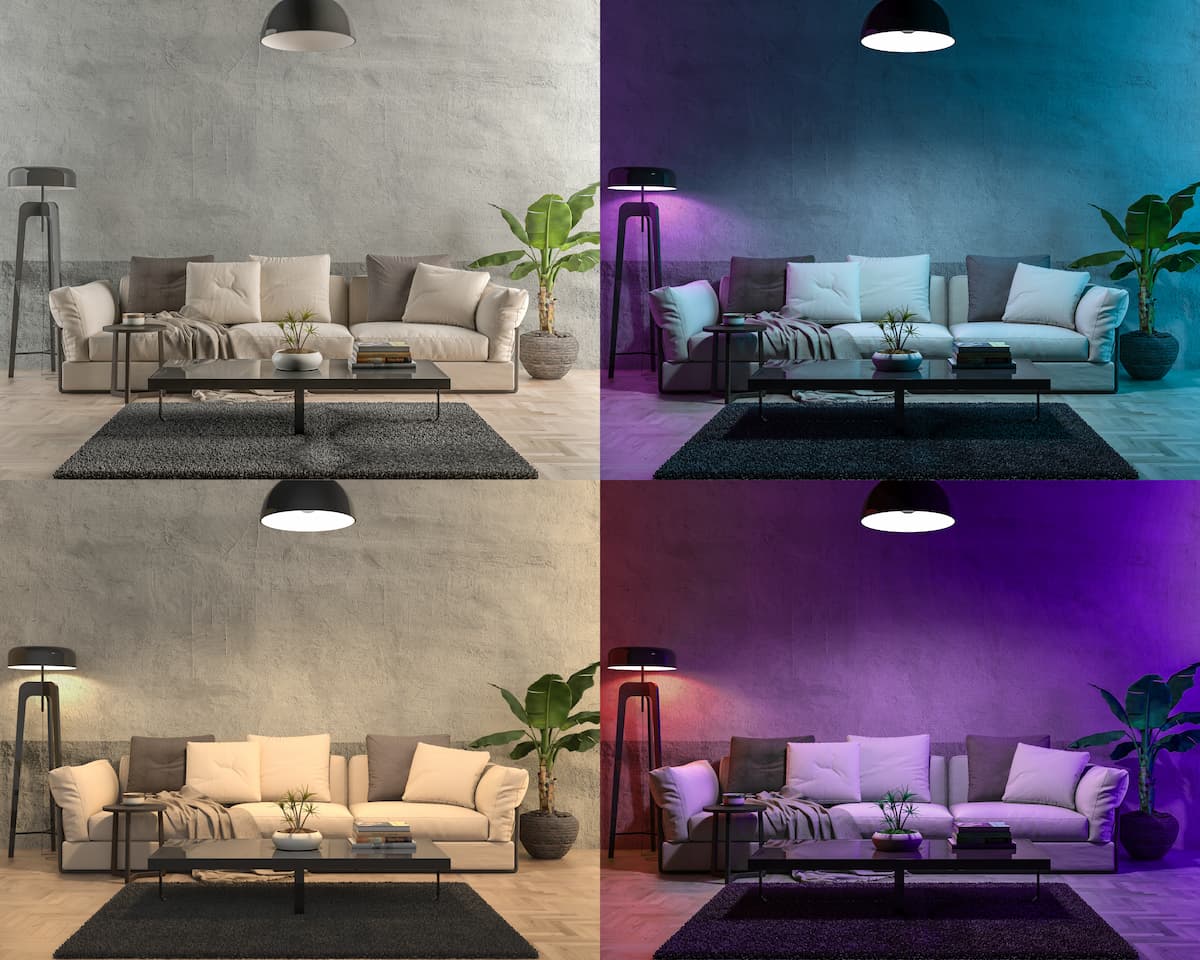
Product options that deliver real color control
Several smart lighting systems offer the color temperature control and scene-building capabilities you need:
The right choice depends on your goals. For comprehensive circadian support throughout your Austin home, an ecosystem approach with professional design guidance delivers the best results.
How intentional lighting improves family wellbeing
Beyond aesthetics, lighting profoundly shapes household health and daily dynamics. Regular exposure to properly-timed artificial light regulates sleep-wake cycles. Research shows lighting directly affects mood, behavior, and hormonal balance. Brighter light intensifies emotions, while warm lighting promotes relaxation.
The practical family benefits compound throughout your routines:
Dimming lights signals household members it's time to wind down, supporting consistent bedtime rituals—especially valuable for kids adjusting to school schedules. Neutral task lighting in study spaces improves focus and reduces eye strain. Brighter, cooler morning lighting helps everyone wake up alert, cutting down on those "just five more minutes" negotiations.
Warm, dimmable dining light encourages lingering conversation at family meals. And when you're entertaining Austin friends on your patio, the right outdoor lighting creates an atmosphere where guests naturally stay longer and connect more deeply.
Interior designer Cathryn Erickson captures the vision: "Bedside lamps help signal to your body that it's time to slow down, creating a gentle evening rhythm that makes the whole space feel more restful."
Your home should feel like you—every moment of the day
The science is clear: light color temperature directly controls neurotransmitter and hormone production, shaping everything from morning alertness to sleep quality. But knowing the science isn't the same as implementing it beautifully throughout your unique Austin home.
That's where intentional design comes in. The difference between a home that feels flat and one that feels alive often comes down to understanding that light isn't just about visibility. It's about biology, emotion, and the invisible architecture that shapes how your family experiences every room, every day.
Start small if you want: swap harsh bulbs above 4000K in living spaces with warm white alternatives. Add a smart lamp to your bedroom with sunset simulation. Notice how different your evenings feel within a week.
Or start comprehensive—with a lighting design that considers your routines, your family's needs, and the specific way Austin's natural light interacts with your spaces throughout the year.
Transform your home's vibe with lighting that adapts to your routine, your activities, and how you actually want to feel.