Layered Lighting Design: Creating Depth and Ambiance in Every Room

Great lighting design is like a well-orchestrated symphony—each element plays its part to create a harmonious whole that's greater than the sum of its parts. Layered lighting design is the professional approach that transforms ordinary rooms into extraordinary spaces through the strategic combination of multiple light sources.
Instead of relying on a single overhead fixture to illuminate an entire room, layered lighting uses different types of lighting working together to create depth, functionality, and ambiance that can adapt to any activity or mood.
The Three Essential Layers
Ambient Lighting: The Foundation
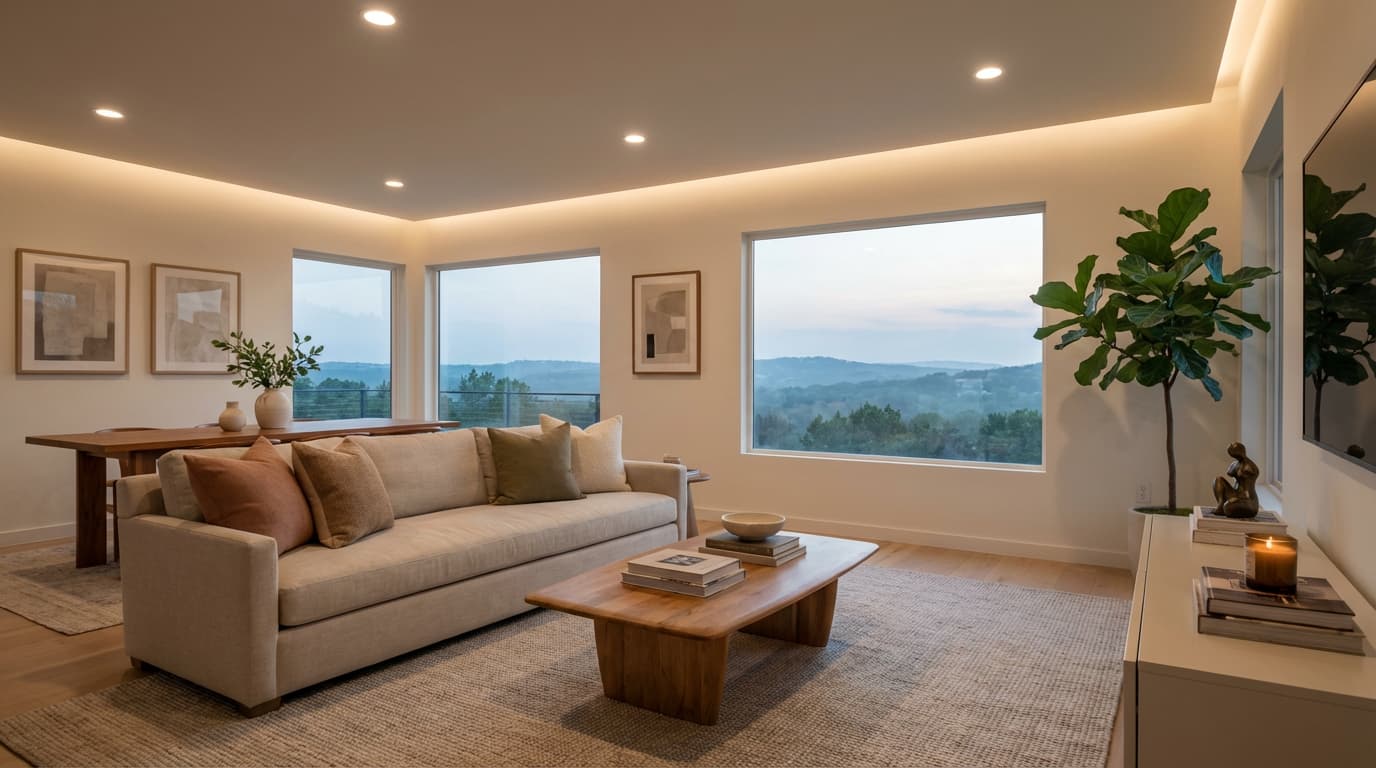
Ambient lighting provides overall illumination and sets the baseline brightness for a room. This foundational layer ensures safe navigation and creates the general atmosphere. Sources include recessed ceiling lights, chandeliers, pendant lights, and wall-mounted fixtures.
The key to successful ambient lighting is achieving even distribution without creating harsh shadows or overly bright spots. Professional designers often use multiple sources rather than relying on a single central fixture.
Task Lighting: Function Meets Form
Task lighting provides focused illumination for specific activities like reading, cooking, working, or grooming. These lights should be bright enough to prevent eye strain while positioned to minimize shadows on work surfaces.
Examples include under-cabinet kitchen lighting, desk lamps, vanity lights, and reading lights. The best task lighting is both highly functional and aesthetically pleasing, contributing to the room's overall design even when not in use.
Accent Lighting: The Drama Creator
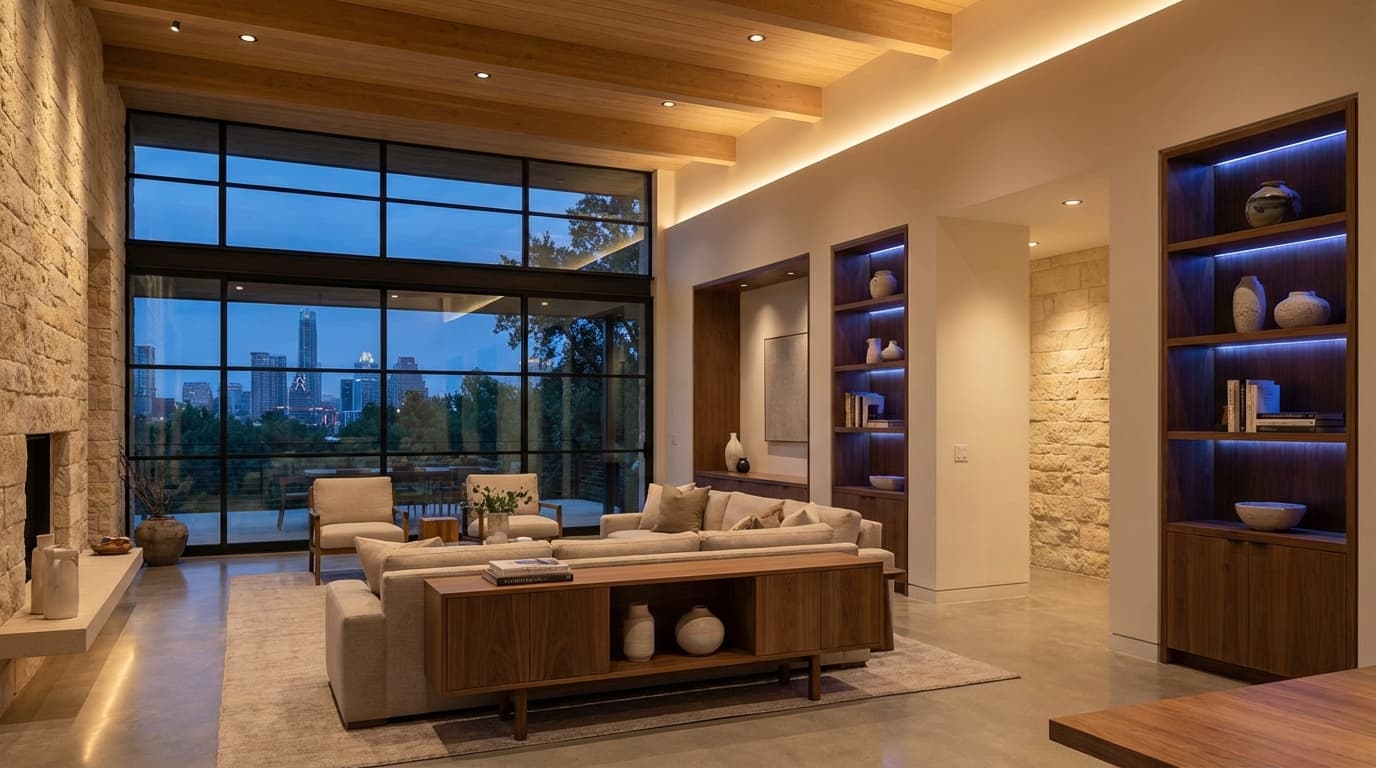
Accent lighting adds visual interest and highlights architectural features, artwork, or decorative elements. This layer creates depth and dimension while drawing attention to the room's best features.
Track lighting, picture lights, wall washers, and uplighting all serve as accent lighting. These fixtures typically provide three times more light on the featured object than the surrounding ambient lighting.
Advanced Layering Techniques
Decorative Lighting: The Fourth Layer
Some designers recognize a fourth layer—decorative lighting—which serves as both a light source and a design element. Chandeliers, artistic pendant lights, and statement fixtures fall into this category, providing both illumination and visual impact.
Color Temperature Layering
Sophisticated lighting designs incorporate varying color temperatures to create depth and interest. Warmer lights (2700K-3000K) create intimacy and relaxation, while cooler lights (3500K-4000K) promote alertness and productivity.
See our Color Temperature Cheat Sheet for a printable room-by-room guide to choosing the right Kelvin range for each lighting layer.
Intensity Variation
Different layers should operate at different intensities to create visual hierarchy. Accent lighting might be brightest to highlight features, task lighting moderate for functionality, and ambient lighting softer for overall comfort.
Room-by-Room Layering Strategies
Living Room Layering
Ambient: Recessed lighting or ceiling-mounted fixtures provide overall illumination. Consider multiple zones that can be controlled separately.
Task: Table lamps beside seating areas, floor lamps for reading, and focused lighting over game or work areas.
Accent: Wall sconces, uplighting behind furniture, artwork illumination, and architectural feature highlighting.
Kitchen Layering
Ambient: Central ceiling fixtures or recessed lighting throughout the space.
Task: Under-cabinet lighting for countertop work, pendant lights over islands, and focused lighting in pantries.
Accent: Display lighting inside glass cabinets, toe-kick lighting for subtle ambiance, and decorative pendant lighting over dining areas.
Bedroom Layering
Ambient: Ceiling-mounted fixtures or recessed lighting with dimming capabilities.
Task: Bedside table lamps, reading lights, and vanity or closet lighting.
Accent: Wall sconces, cove lighting behind headboards, and subtle accent lighting highlighting artwork or architectural details.
Control Systems: Orchestrating Your Layers
Dimming Controls
Every layer should be dimmable to allow for activity-appropriate lighting levels. Modern LED-compatible dimmers provide smooth control from full brightness to nearly off.
Scene Control
Preset scenes combine different layers at predetermined levels for specific activities. "Entertaining" might emphasize accent lighting, while "Reading" would focus on task lighting with reduced ambient levels.
Smart Integration
Smart lighting systems allow sophisticated control of layered lighting through apps, voice commands, and automation. Different layers can respond to time of day, occupancy, or integration with other smart home systems.
Common Layering Mistakes to Avoid
Over-Reliance on Recessed Lighting
While recessed lights are excellent for ambient lighting, using them as the only light source creates flat, uninspiring illumination. They should be part of a layered approach, not the entire solution.
Inadequate Task Lighting
Many rooms suffer from insufficient task lighting, forcing occupants to strain their eyes or rely on harsh overhead lighting for detailed work.
Ignoring Vertical Surfaces
Rooms feel more spacious and inviting when walls are illuminated along with floors and work surfaces. Wall washing and uplighting techniques address this common oversight.
Energy Efficiency in Layered Design
LED technology makes layered lighting more energy-efficient than ever. Multiple LED sources often consume less energy than single high-wattage fixtures while providing superior light quality and control.
Smart controls further enhance efficiency by ensuring lights operate only when needed and at appropriate levels for current activities.
The Psychology of Layered Lighting
Layered lighting affects mood and behavior in profound ways. Bright, even lighting promotes alertness and activity, while varied, softer lighting creates relaxation and intimacy. The ability to adjust lighting layers allows spaces to transform throughout the day to support different activities and moods.
Professional Design Benefits
While basic layering principles can be applied by homeowners, professional lighting designers bring expertise in fixture selection, placement optimization, control integration, and code compliance. They ensure that all layers work harmoniously while addressing the specific needs of your space and lifestyle.
Professional installation also ensures safety, proper electrical load management, and optimal performance from your lighting investment.
Creating Your Layered Lighting Plan
Start by identifying activities in each space and the lighting requirements for each. Consider the architectural features worth highlighting and the mood you want to create at different times of day.
Plan control strategies early—how will you adjust different layers for various activities? Will you use traditional switches, dimmers, or smart home integration?
Remember that layered lighting is an investment in your daily quality of life. Well-designed lighting makes every activity more enjoyable and every space more beautiful.
At Radiant Spaces, we specialize in creating sophisticated layered lighting designs that transform Austin homes into perfectly illuminated living environments. Our designers understand how to balance function and beauty while incorporating the latest technology and energy-efficient solutions.