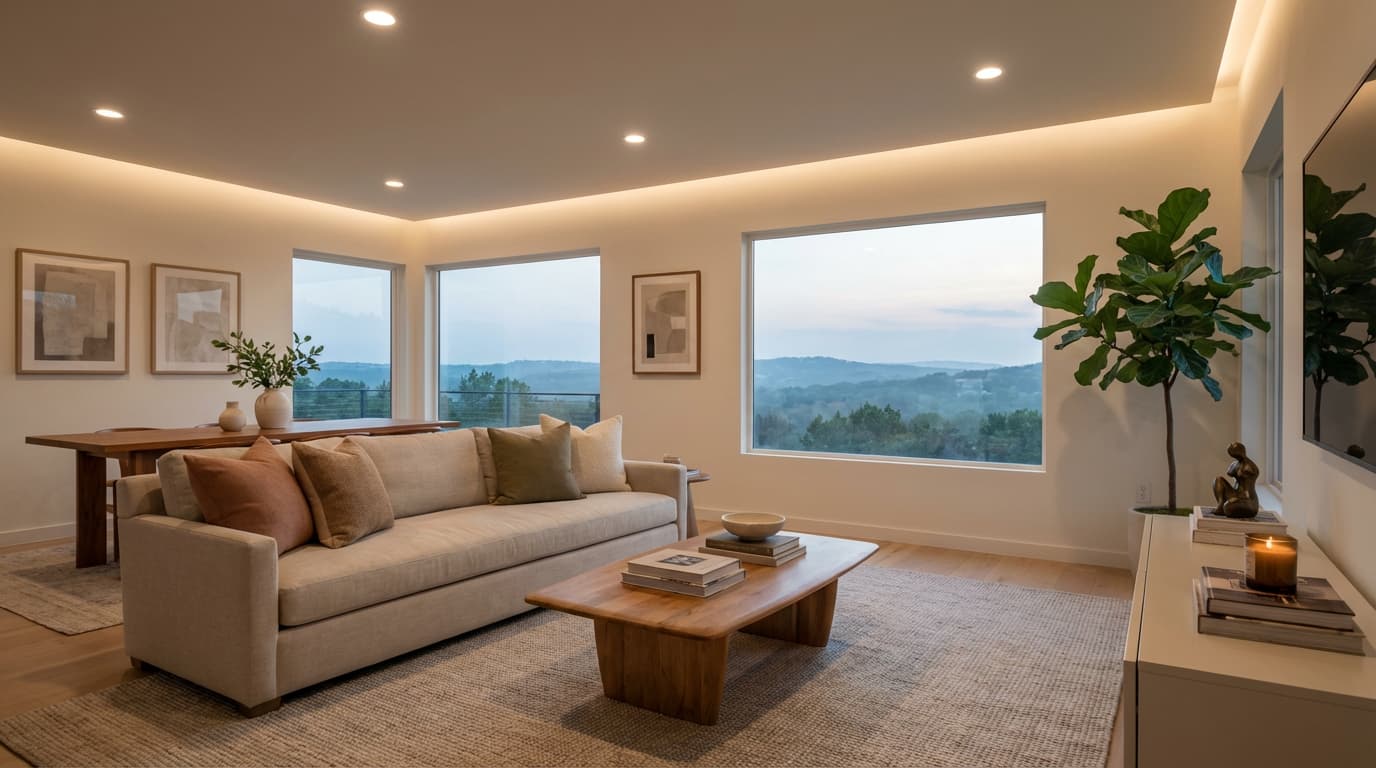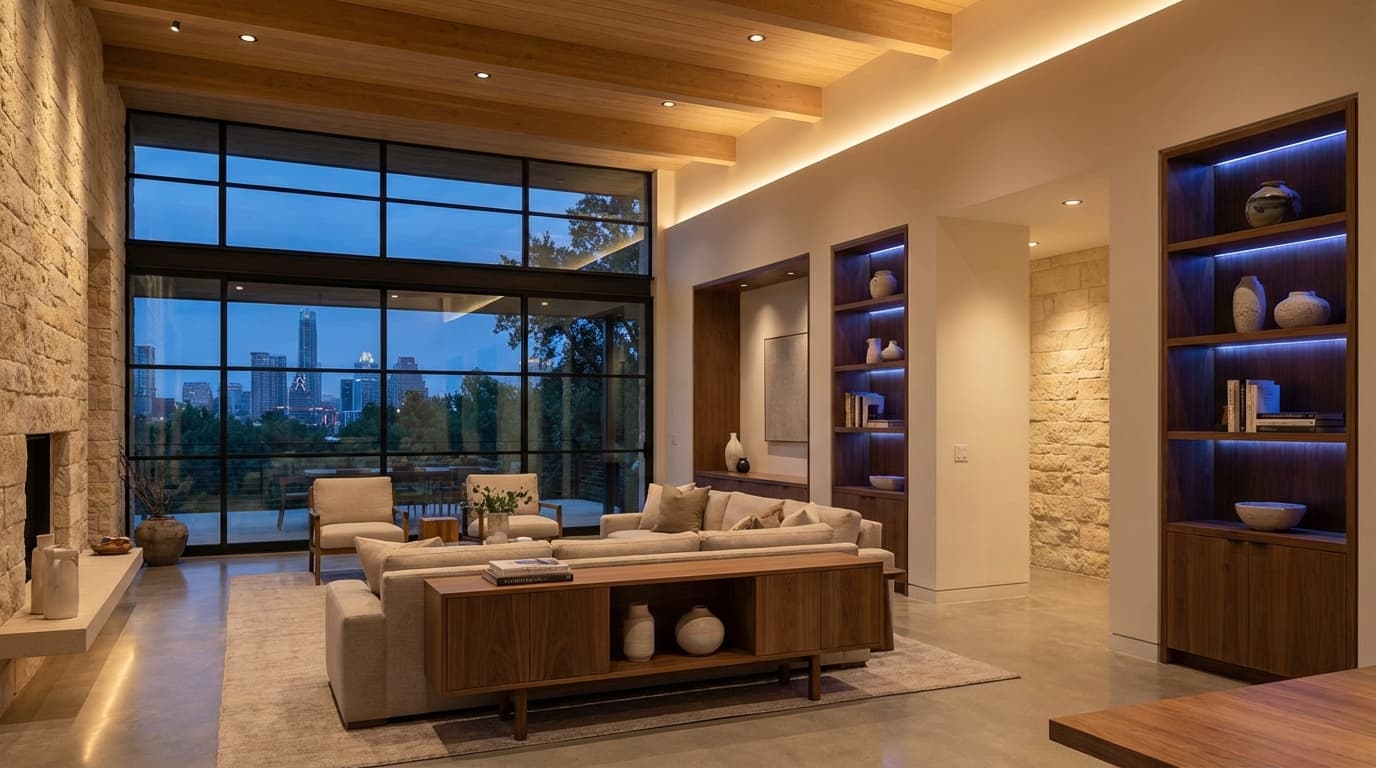


Why Designing for Central Texas Is Different
Austin is a bright city.
Long summers. Strong southern sun. Expansive windows. Modern homes designed to capture daylight from every angle.
Natural light is one of the most celebrated features of homes in Westlake, Lakeway, Mueller, and throughout Central Texas.
But here’s what most homeowners don’t realize:
Natural light changes dramatically throughout the day — and across seasons.
If interior lighting isn’t designed to respond to those changes, spaces can feel:
- Harsh in the afternoon
- Dim after sunset
- Glare-heavy in the evening
- Overexposed during peak sun hours
Thoughtful lighting design in Austin doesn’t compete with daylight. It works with it.
The Intensity of Central Texas Sunlight
Austin’s latitude and climate produce strong, direct sunlight for much of the year.
This creates:
- High contrast between bright and shaded areas
- Strong reflections on polished surfaces
- Overheating near large windows
- Washed-out interior walls
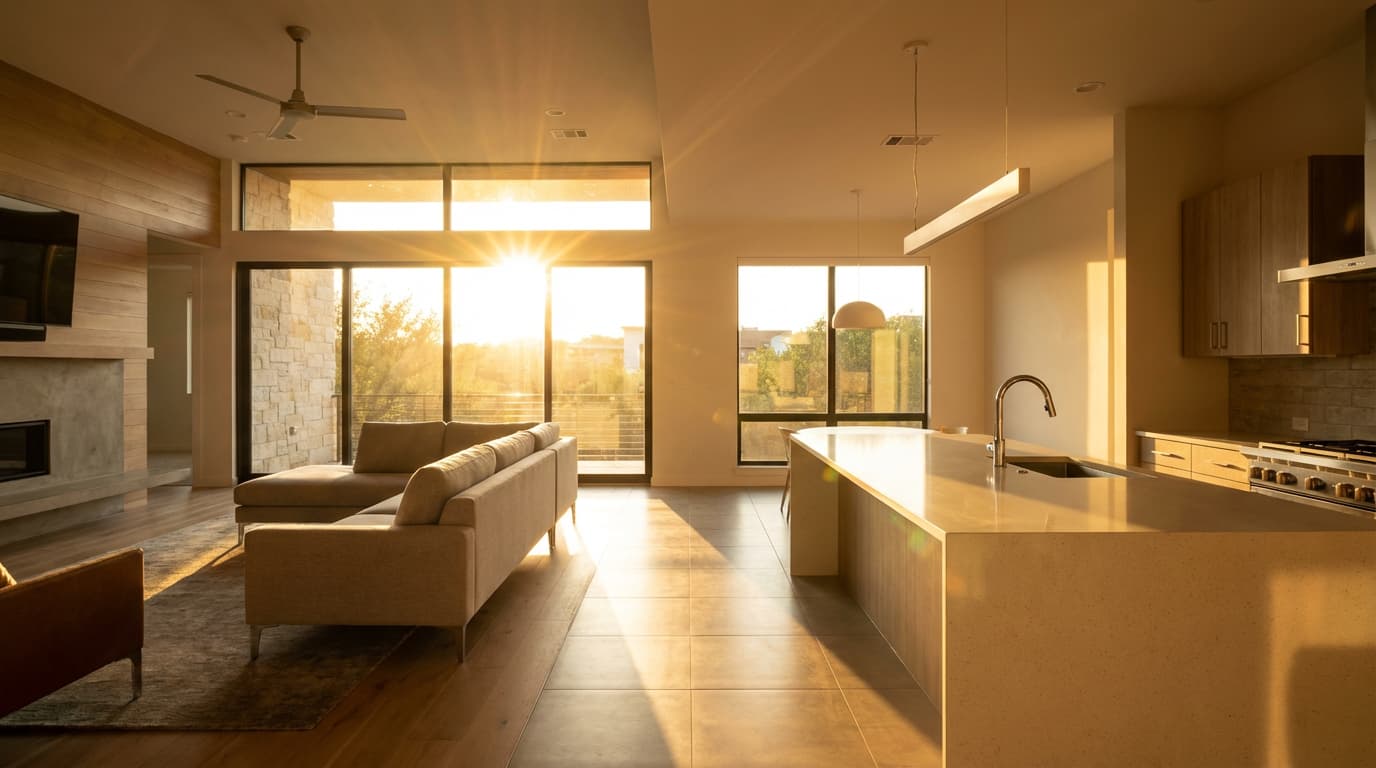
Homes with west-facing windows often experience intense afternoon glare — especially in open floor plans with minimal wall division.
If interior lighting remains static while natural light shifts, rooms can feel visually unbalanced.
Designing lighting for Austin requires anticipating these fluctuations.
Seasonal Light Shifts in Austin
Natural light in Austin behaves differently depending on the time of year.
Summer
- Longer daylight hours
- Later sunsets
- Stronger midday brightness
- Higher indoor glare levels
Evenings require lighting that transitions smoothly as outdoor light lingers longer than expected.
Winter
- Lower sun angle
- Shorter daylight windows
- Cooler natural light tones
- Earlier darkness
Interior lighting must compensate for earlier sunsets while maintaining warmth.
Static lighting systems ignore these seasonal differences. Intentional systems account for them.
Large Windows and Open Floor Plans
Modern Austin homes frequently include:
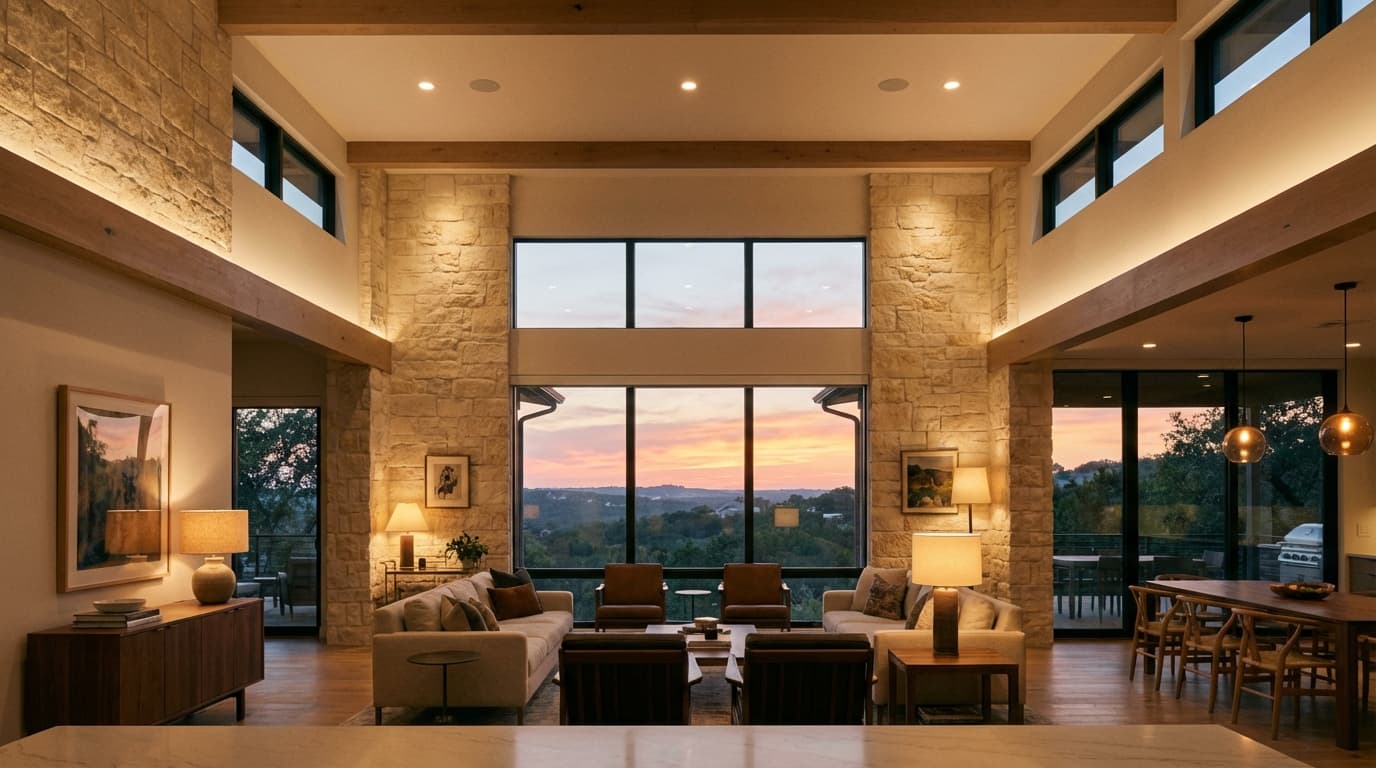
- Floor-to-ceiling windows
- Sliding glass walls
- Open living/dining/kitchen layouts
While visually stunning, these features introduce complexity.
During the day:
- Some zones may be flooded with light.
- Others may remain shaded.
At night:
- The same spaces may rely entirely on artificial light.
Without layered lighting, these transitions feel abrupt.
Strategic placement of ambient, task, and accent lighting allows different areas within the same open space to adapt independently.
Managing Glare and Reflection
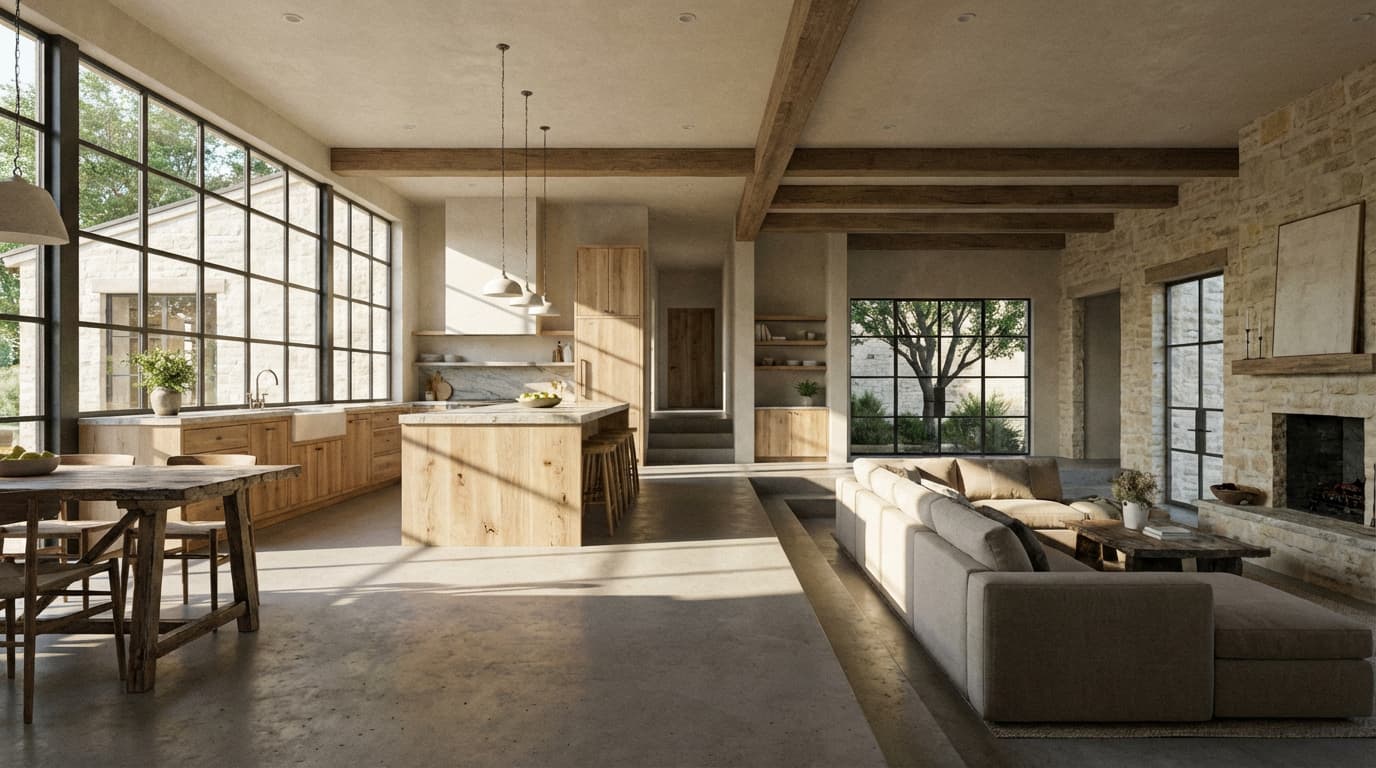
Austin homes often feature:
- Quartz countertops
- Polished concrete floors
- Large-format tile
- Expansive glass surfaces
These materials amplify light.
When overhead fixtures are overly bright, glare becomes uncomfortable — especially in the evening when pupils are adjusted for lower light levels.
Proper lighting design mitigates glare by:
- Washing walls instead of spotlighting floors
- Using indirect light sources
- Balancing vertical illumination
- Dimming intelligently as daylight fades
This approach increases perceived brightness without increasing harshness.
Transitioning From Daylight to Evening Comfort
One of the biggest lighting mistakes in Austin homes is failing to manage the shift from daylight to artificial light.
As the sun sets, especially during summer, there’s often a mismatch:
- Exterior light remains bright.
- Interior lighting switches on at full intensity.
This creates visual discomfort.
Intentional systems gradually increase interior light as daylight fades — instead of flipping from off to full brightness.
This is where circadian lighting principles become powerful. A well-planned circadian lighting strategy helps manage these transitions naturally.
You can learn more about this in our guide to circadian lighting for Austin homes.
How Orientation Impacts Interior Lighting
Not all Austin homes receive light equally.
South-Facing Homes
- Consistent, strong daylight
- Require glare mitigation strategies
West-Facing Homes
- Intense afternoon heat and brightness
- Benefit from layered evening lighting
North-Facing Homes
- Softer daylight
- Often require more daytime interior brightness
Lighting design must respond to orientation — not fight it.
This is why thoughtful planning matters before selecting fixtures.
Designing Lighting That Works With Natural Light
Effective Austin lighting design includes:
1. Zoning
Open floor plans need multiple lighting zones that operate independently.
2. Dimming
Nearly every fixture should be dimmable.
3. Indirect Illumination
Wall washes, coves, and concealed strips create balanced brightness.
4. Tunable White Capability
Color temperature should adapt throughout the day.
Not sure which Kelvin range fits each room? Our Color Temperature Cheat Sheet maps warm, neutral, and cool tones to every space in your home.
5. Scene Programming
Morning, afternoon, and evening settings should shift automatically.
These strategies allow lighting to complement natural light rather than overpower it.
This is where professional lighting design services in Austin make a measurable difference.
Ready to choose smart lighting that adapts to Austin's natural light? Our free Smart Mood Lighting Buyer's Guide covers color temperature ranges, dimming quality, and automation — so your artificial lighting works with the sun, not against it.
Outdoor Living and Indoor Flow
Austin’s lifestyle blends indoor and outdoor living.
Patios, decks, and pool areas often remain visible from interior spaces.
If exterior lighting is too bright or too cool in the evening, it can disrupt interior ambiance.
Balanced exterior lighting ensures:
- Soft transitions from inside to outside
- Reduced glare through glass
- Comfortable nighttime entertaining
Lighting design must consider both sides of the window.
Retrofitting for Austin’s Light Conditions
Many homeowners wonder whether these adjustments require renovation.
In many cases, improvements can be made through:
- Smart dimmer integration
- Additional accent lighting
- Under-cabinet task lighting
- Strategic fixture replacement
The goal is not more light — it’s better-balanced light.
Why This Matters for Long-Term Comfort
Natural light is dynamic.
Interior lighting should be dynamic too.
When lighting is designed with Austin’s climate and architecture in mind, homes feel:
- Calmer in the evening
- Brighter without glare
- More adaptable throughout the day
- More supportive of daily routines
This is where lighting moves beyond decoration — and becomes an integral part of how a home functions.
Designing for Austin, Not Just for Aesthetics
Every city has its lighting challenges.
Austin’s include:
- Strong sun
- Extended daylight
- High-contrast interiors
- Modern open architecture
A lighting plan that works in a northern climate may not feel balanced in Central Texas.
Designing with local conditions in mind ensures lighting supports the way Austin homes are actually lived in.
If you're unsure whether your lighting complements your home’s orientation, start with a lighting consultation.