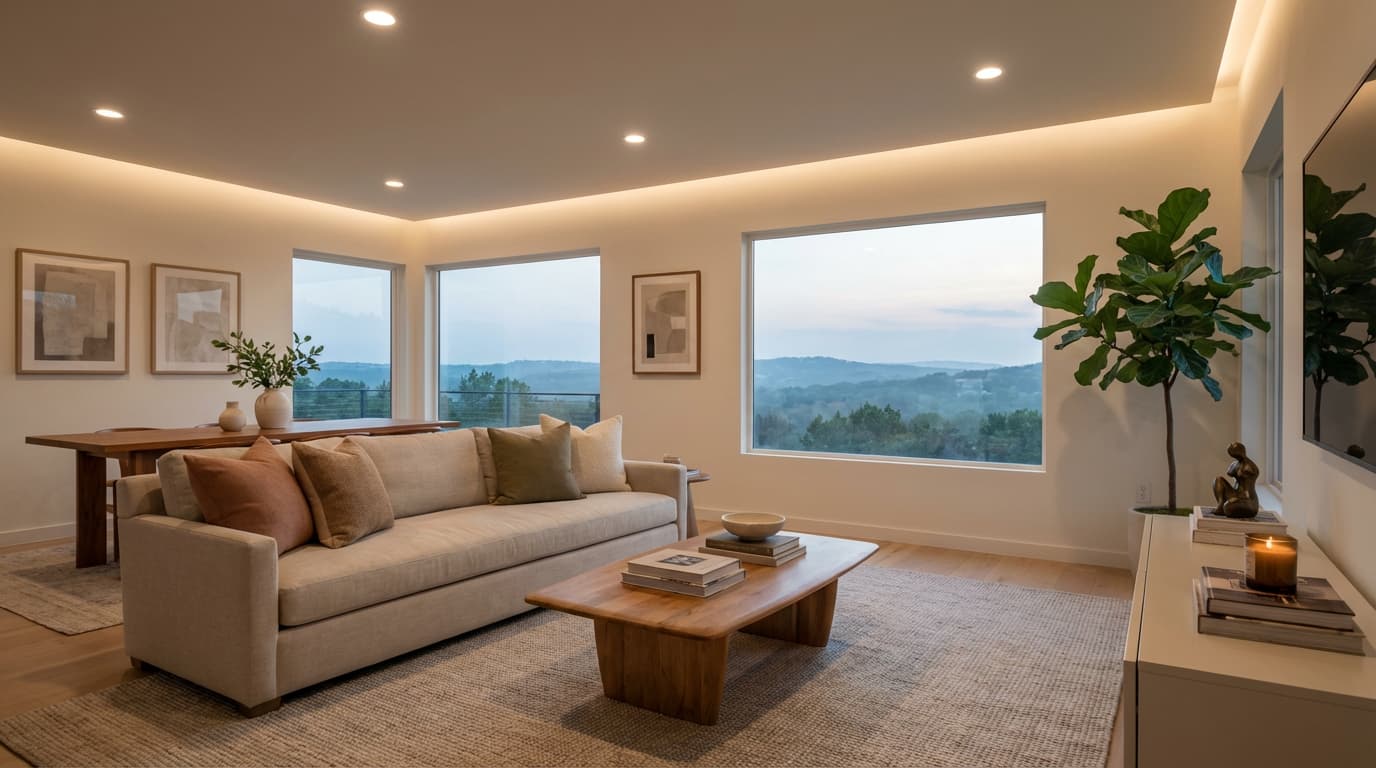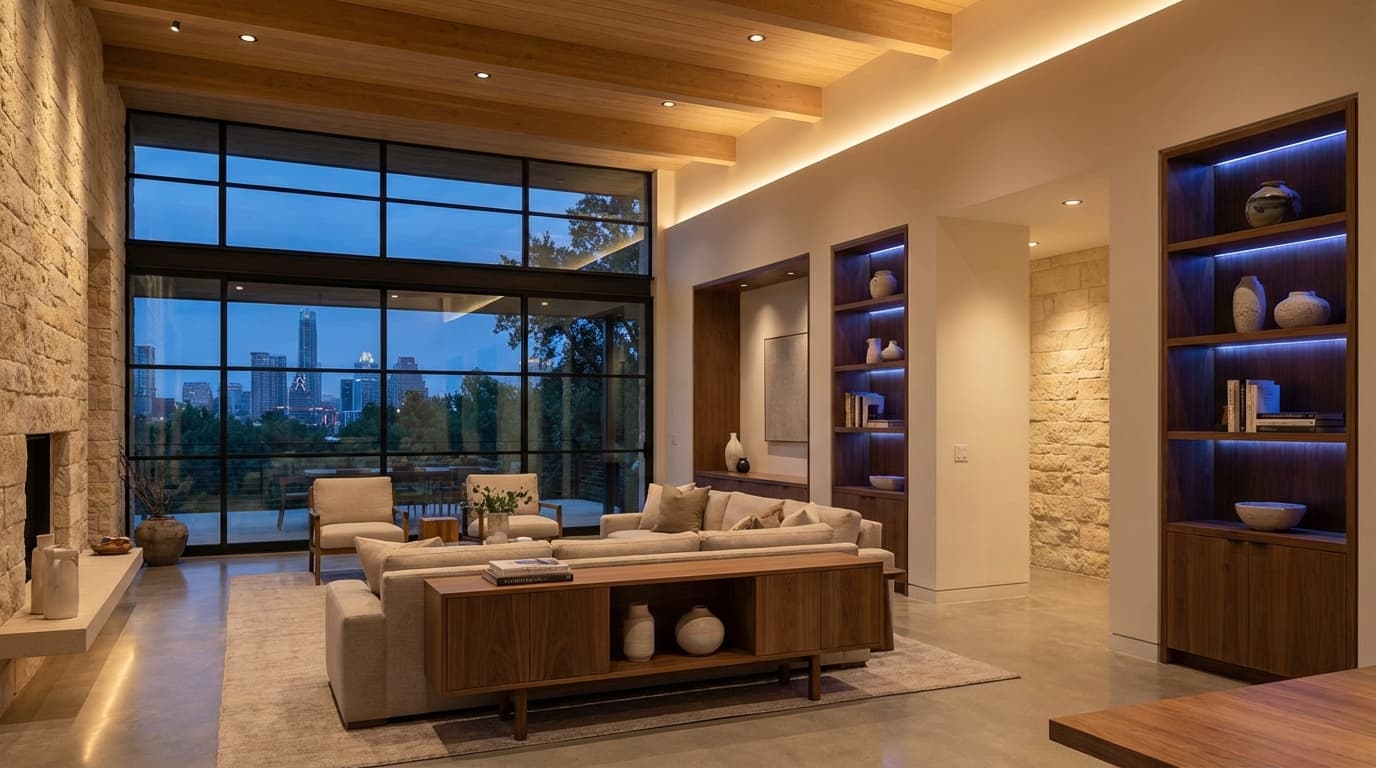
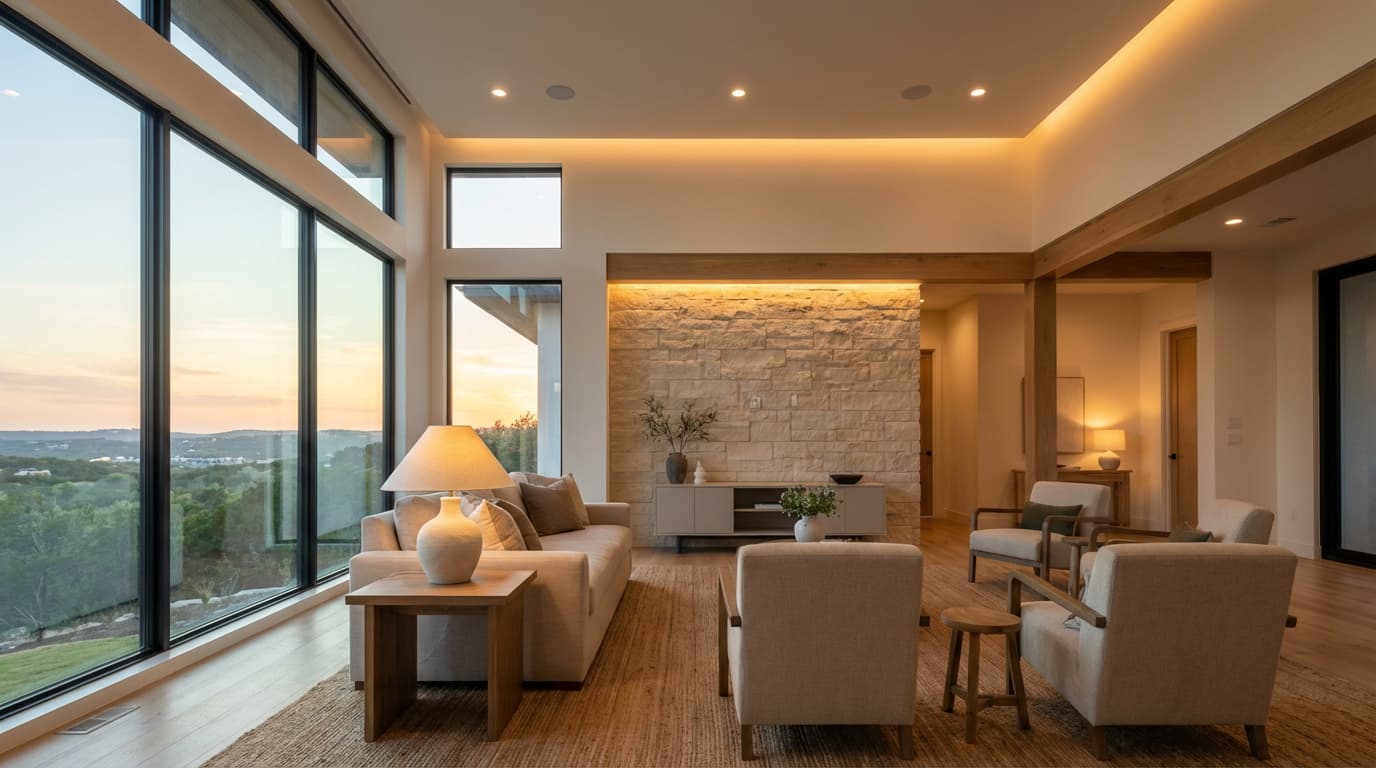

How Intentional Lighting Design Supports Sleep, Focus, and Mood
Austin homes are filled with light.
Long summer evenings. Strong southern exposure. Expansive windows. Open floor plans that let daylight travel deep into living spaces.
And yet, many homes still feel too bright at night, too dim in the morning, or harsh in the afternoon.
That disconnect often comes down to one thing: lighting that doesn’t align with your body’s natural rhythm.
Circadian lighting isn’t about color-changing bulbs or trendy smart devices. It’s about designing light that supports how your body naturally wakes, focuses, relaxes, and sleeps — especially in a climate like Austin’s.
When designed intentionally, circadian lighting becomes one of the most impactful upgrades you can make to a home.
How Intentional Lighting Design Supports Sleep, Focus, and Mood
Austin homes are filled with light.
Long summer evenings. Strong southern exposure. Expansive windows. Open floor plans that let daylight travel deep into living spaces.
And yet, many homes still feel too bright at night, too dim in the morning, or harsh in the afternoon.
That disconnect often comes down to one thing: lighting that doesn’t align with your body’s natural rhythm.
Circadian lighting isn’t about color-changing bulbs or trendy smart devices. It’s about designing light that supports how your body naturally wakes, focuses, relaxes, and sleeps — especially in a climate like Austin’s.
When designed intentionally, circadian lighting becomes one of the most impactful upgrades you can make to a home.
What Is Circadian Lighting?
Your circadian rhythm is your body’s internal clock. It regulates sleep, energy levels, focus, and hormone production throughout the day.
Light is the primary signal that influences this rhythm.
Bright, cooler light in the morning tells your body to wake up and become alert.
Neutral, balanced light during the day supports focus and productivity.
Warm, lower light in the evening signals your body to wind down and prepare for sleep.
Traditional residential lighting does none of this. Most homes rely on static bulbs that stay the same color and brightness all day — regardless of time or activity.
Circadian lighting uses:
• Tunable white light (adjustable color temperature)
• Layered lighting design
• Automated transitions throughout the day
• Intuitive controls
The result isn’t dramatic or flashy. It’s subtle. And it feels natural.
Why Circadian Lighting Matters in Austin Homes
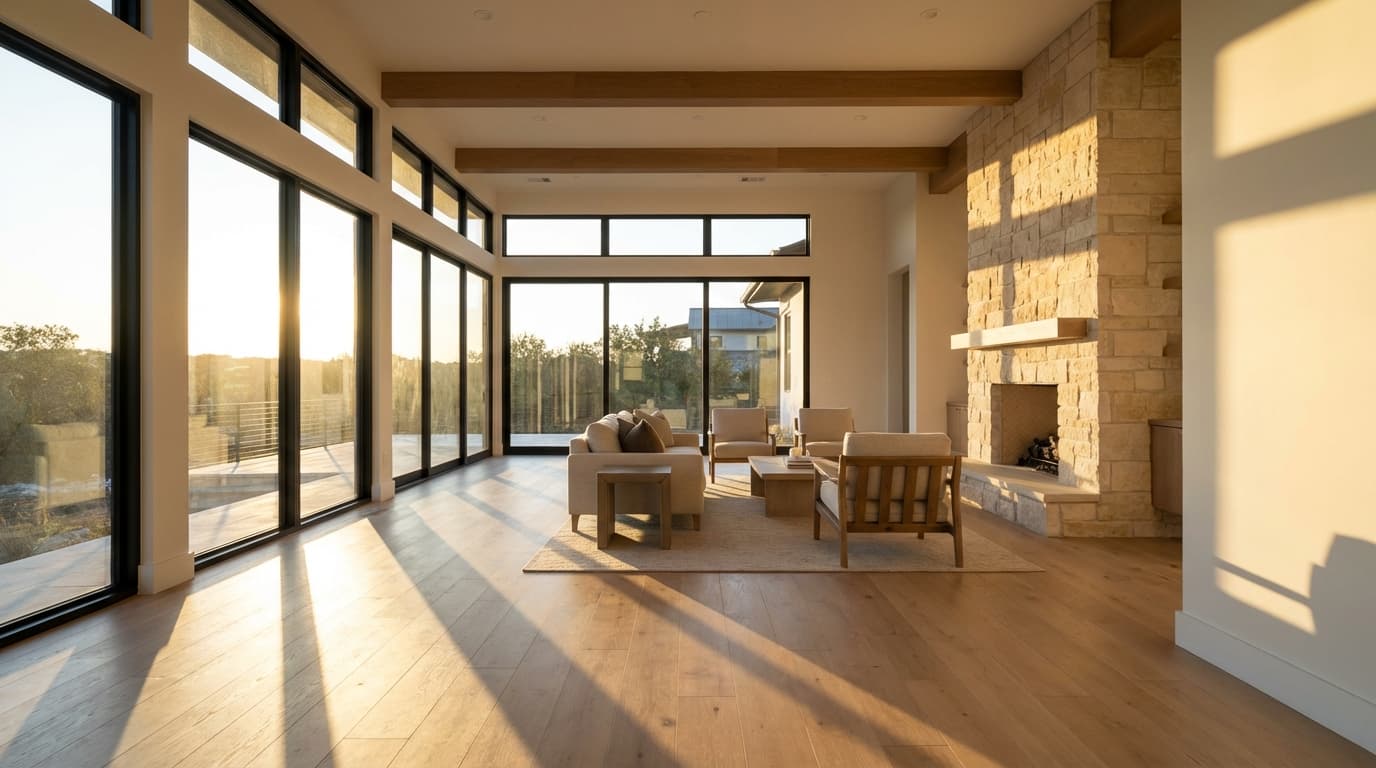
Austin presents unique lighting conditions.
Intense Natural Daylight
Large windows and strong sun exposure mean rooms can feel bright during the day — but unbalanced once the sun sets.
Long Summer Evenings
Late sunsets can delay your body’s natural wind-down cycle if interior lighting remains too bright or too cool at night.
Open Floor Plans
Many Austin homes feature large, connected spaces. Without layered lighting, these areas often rely on uniform overhead fixtures that create glare and flat illumination.
Mixed Indoor–Outdoor Living
Patios, decks, and entertaining areas need lighting that transitions smoothly from indoor environments without disrupting circadian cues.
Circadian lighting design accounts for these realities. Instead of fighting the natural light in your home, it complements it.
Circadian Lighting Is Designed — Not Installed
There’s a misconception that circadian lighting is simply a matter of installing smart bulbs.
In reality, it starts with design.
Layered Lighting
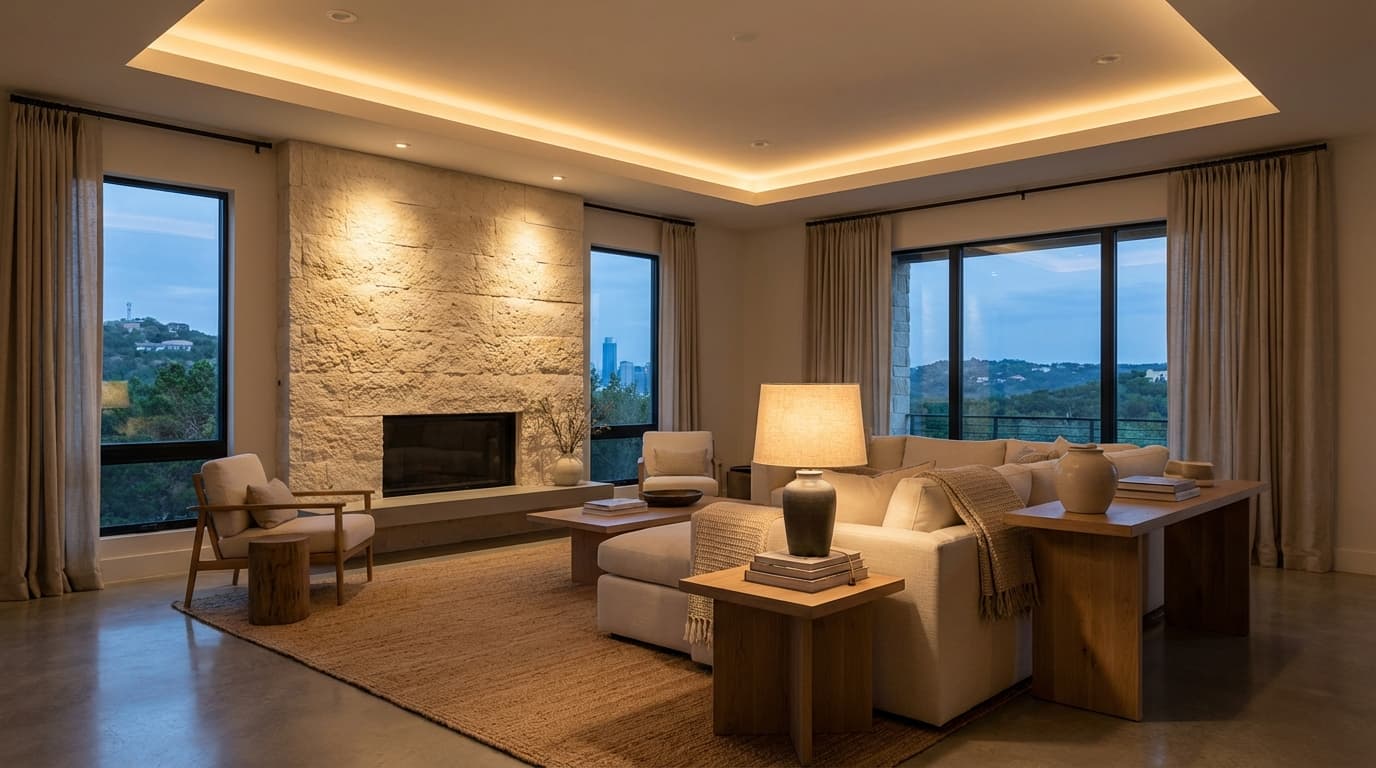
Circadian systems depend on multiple layers of light working together:
• Ambient lighting for overall brightness
• Task lighting for function
• Accent lighting for depth and mood
Relying on overhead lights alone makes proper circadian transitions impossible.
If you’re unfamiliar with how layered lighting works, read our guide here:
Layered Lighting Design: Creating Depth and Ambiance in Every Room
Tunable White Technology
Modern lighting systems allow color temperature to shift gradually between approximately 2700K (warm) and 5000K (cool daylight).
The shift must be gradual, balanced, and calibrated to room use. Without thoughtful design, tunable systems feel artificial rather than natural.
Want to see what each Kelvin setting actually looks like? Our Color Temperature Cheat Sheet is a free visual guide to warm, neutral, and cool tones for every room.
Automated Transitions
The most effective circadian lighting changes throughout the day automatically:
• Bright, cooler light in early morning
• Neutral midday tones
• Warm, dimmed light in the evening
Manual adjustments defeat the purpose.
Simplicity of Control
Lighting should support daily life, not complicate it.
Well-designed systems allow intuitive scene selection — not endless app adjustments.
Room-by-Room Circadian Strategy
Circadian lighting works best when tailored to how each room functions.
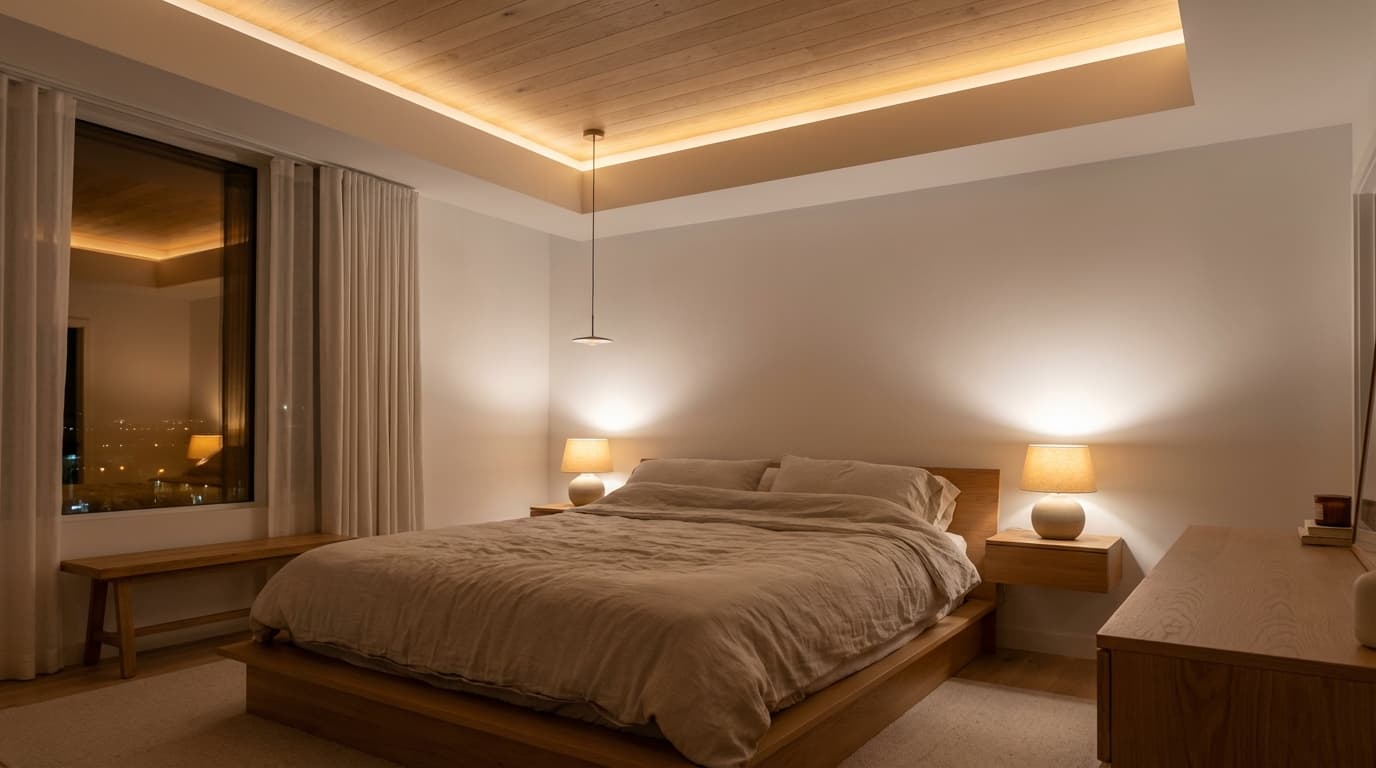
Bedroom
Evening light should be warm and low. Cooler tones late at night suppress melatonin and make sleep harder.
In Austin homes with large west-facing windows, layered window treatments and balanced bedside lighting are critical.
Kitchen
Morning task lighting benefits from brighter, slightly cooler tones. Under-cabinet lighting plays a key role here.
As evening approaches, the same kitchen can transition to softer lighting for dining and entertaining.
Living Room
Layered lighting is essential. Wall washes, accent lighting, and dimmable fixtures create flexible scenes that shift naturally from day to night.
Home Office
Cooler midday light can improve alertness and productivity. Adjustable brightness helps compensate for changing natural light levels throughout the day.
Bathroom
Early mornings benefit from brighter light. Late evenings should shift warmer to avoid overstimulation before sleep.
Is Circadian Lighting Worth It?
The concept of aligning light with biological rhythms is not new. What’s changed is the technology.
Modern smart lighting systems now make circadian design practical for residential environments.
The value isn’t in dramatic color shifts. It’s in:
• Subtle adjustments
• Improved sleep quality
• Reduced glare
• More comfortable evenings
• Better energy during the day
For many Austin homeowners, the difference is felt within weeks.
Can Circadian Lighting Be Added to an Existing Home?
In many cases, yes.
Options include:
• Replacing existing fixtures with tunable alternatives
• Adding layered lighting elements
• Integrating smart dimmers
• Programming scene transitions
However, retrofits require careful planning to avoid overcomplicating the system.
If you're considering upgrades, explore our lighti services here:
Learn more ->
Frequently Asked Questions
What is circadian lighting?
Circadian lighting is a lighting approach that aligns indoor light with your body’s natural daily rhythm. It adjusts brightness and color temperature throughout the day to support alertness, relaxation, and sleep.
Does circadian lighting help with sleep?
It can. Warmer, lower-intensity light in the evening reduces melatonin suppression, making it easier to fall asleep naturally.
Is circadian lighting different from smart lighting?
Yes. Smart lighting refers to connected control systems. Circadian lighting is a design strategy that may use smart technology to automate natural light transitions.
How much does circadian lighting cost in Austin?
Costs vary depending on whether you’re retrofitting existing fixtures or designing a whole-home system. A consultation helps determine appropriate scope and investment.
Is circadian lighting worth it?
For many Austin homeowners, yes — especially in homes with strong natural light exposure or irregular daily routines. The benefits are experiential rather than dramatic.
Designing Light That Works With You
Circadian lighting isn’t about gadgets.
It’s about creating environments that feel natural from morning to night.
In a city like Austin — where light is abundant, intense, and constantly shifting — intentional lighting design makes a measurable difference in how your home supports daily life.
If you’re considering circadian lighting for your Austin home, start with clarity.
Schedule a lighting consultation here:
[Insert link to /request-free-consultation]