
Walk into a beautifully designed home in Austin and you’ll notice something immediately.
It feels right.
That feeling isn’t just furniture, paint color, or décor. It’s lighting — specifically, well-designed ambient lighting.
If you’re researching ambient lighting Austin, this is your complete master guide. We’ll walk through what ambient lighting really means, how it works in Central Texas homes, what it costs, and how to design it correctly from the start.
Whether you live in West Lake Hills, Mueller, East Austin, Lakeway, or a downtown condo near Lady Bird Lake — ambient lighting is the foundation that makes your space feel intentional.
What ambient lighting actually means (and what it doesn’t)
Ambient lighting is the base layer of illumination in a room. It provides overall visibility and sets the tone for the entire environment.
It is not:
- Decorative accent lighting
- Task lighting for cooking or reading
- A single ceiling fixture in the middle of the room
Ambient lighting is the glow that allows everything else to feel cohesive.
In professional layered lighting design, ambient lighting always comes first.
Why ambient lighting matters more in Austin homes
Austin architecture presents unique lighting challenges.
Large windows, Texas limestone, open-concept layouts, and intense summer sunlight mean your home’s lighting needs shift dramatically throughout the day.
In Westlake or Lakeway homes with higher ceilings, light disperses differently. In East Austin bungalows, ceiling height and layout create different shadow patterns. Downtown condos near The Domain often rely heavily on artificial lighting after sunset due to surrounding buildings.
Ambient lighting ensures smooth transitions from:
- Bright Hill Country mornings
- Golden-hour evenings over MoPac
- Relaxed nighttime wind-down
Without intentional ambient design, your space can feel harsh, flat, or slightly “off” after dark.
The layered lighting framework (the Radiant Spaces method)
At Radiant Spaces, we design ambient lighting using a four-step framework tailored to Austin homes.
1. Natural light analysis
We evaluate window direction, daylight intensity, and seasonal variation.
2. Architecture review
Ceiling height, beam placement, limestone textures, and open-concept sightlines determine fixture spacing.
3. Lifestyle rhythm mapping
How does your home function at 7am? 2pm? 10pm? Lighting should follow your day.
4. Smart control integration
Dimming, scheduling, and scene control ensure your lighting adapts — not stays static.
Ambient lighting isn’t installed. It’s curated.
The three layers of lighting (and where ambient fits)
Professional lighting design follows a layered approach:
Ambient lighting
The base layer. Even illumination across the entire room.
Task lighting
Focused lighting for specific activities like cooking, reading, or working.
Accent lighting
Directional or decorative lighting that highlights architectural features and creates mood.
If the ambient layer is weak, the other layers feel disconnected. The room never feels balanced.
Types of ambient lighting that work best in Austin homes
Different architectural styles call for different ambient strategies.
Recessed lighting
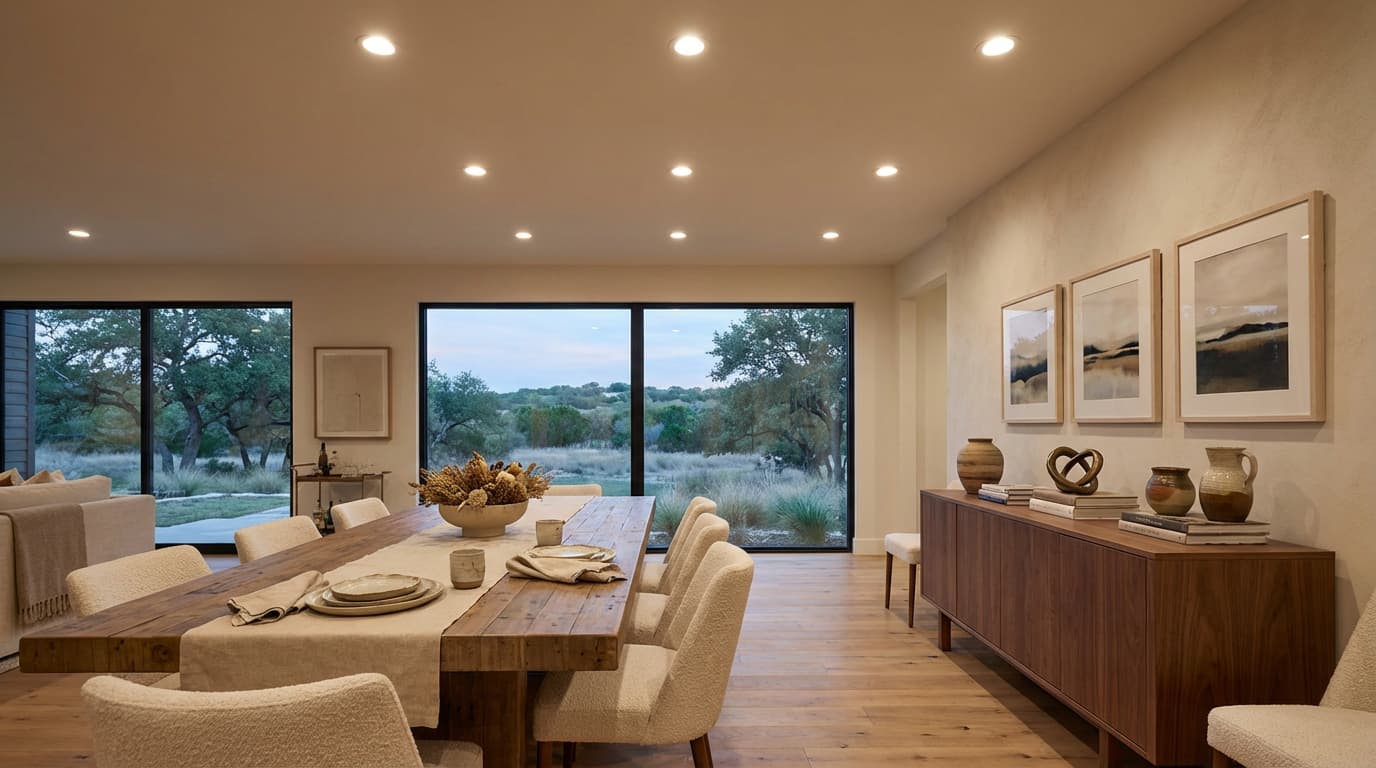
Smart recessed downlights distribute even illumination across open-concept spaces. Ideal for Mueller homes and new builds in Cedar Park.
Cove lighting
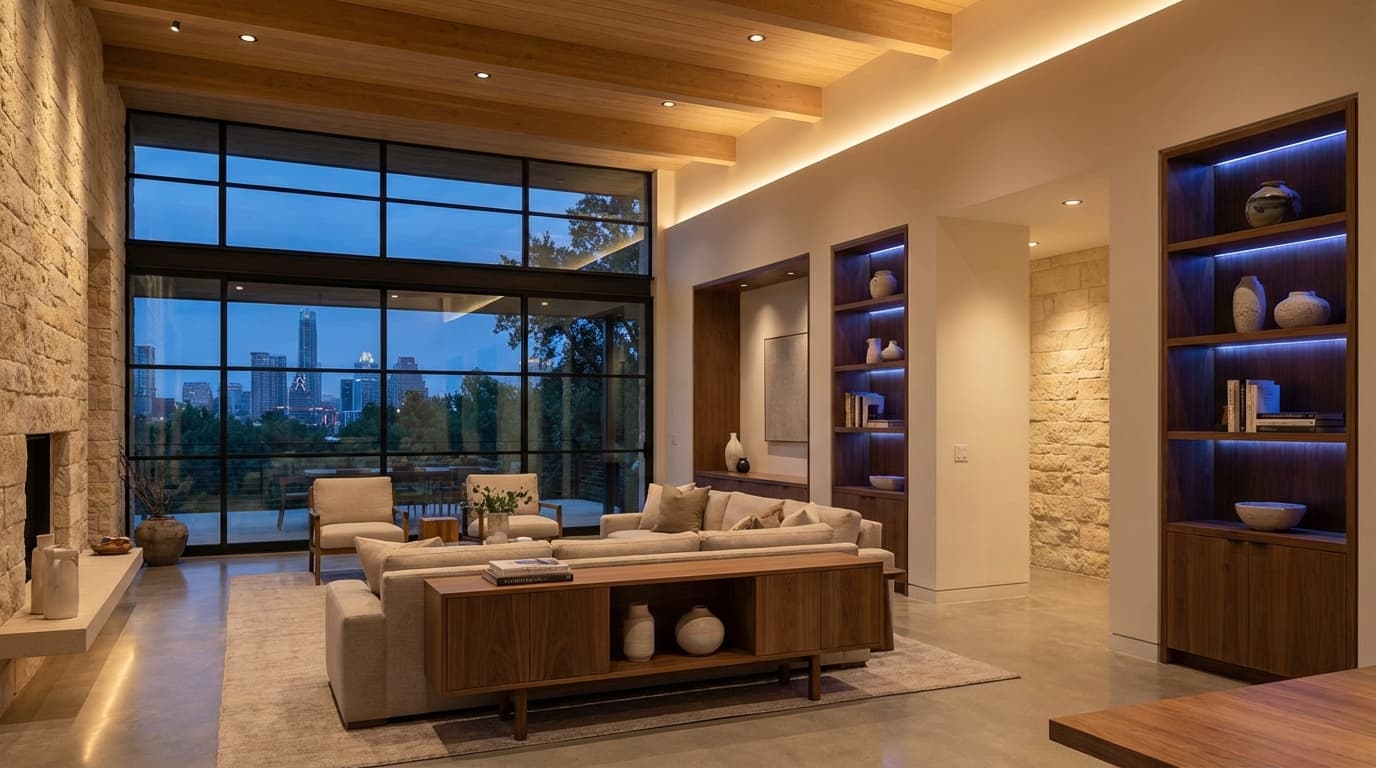
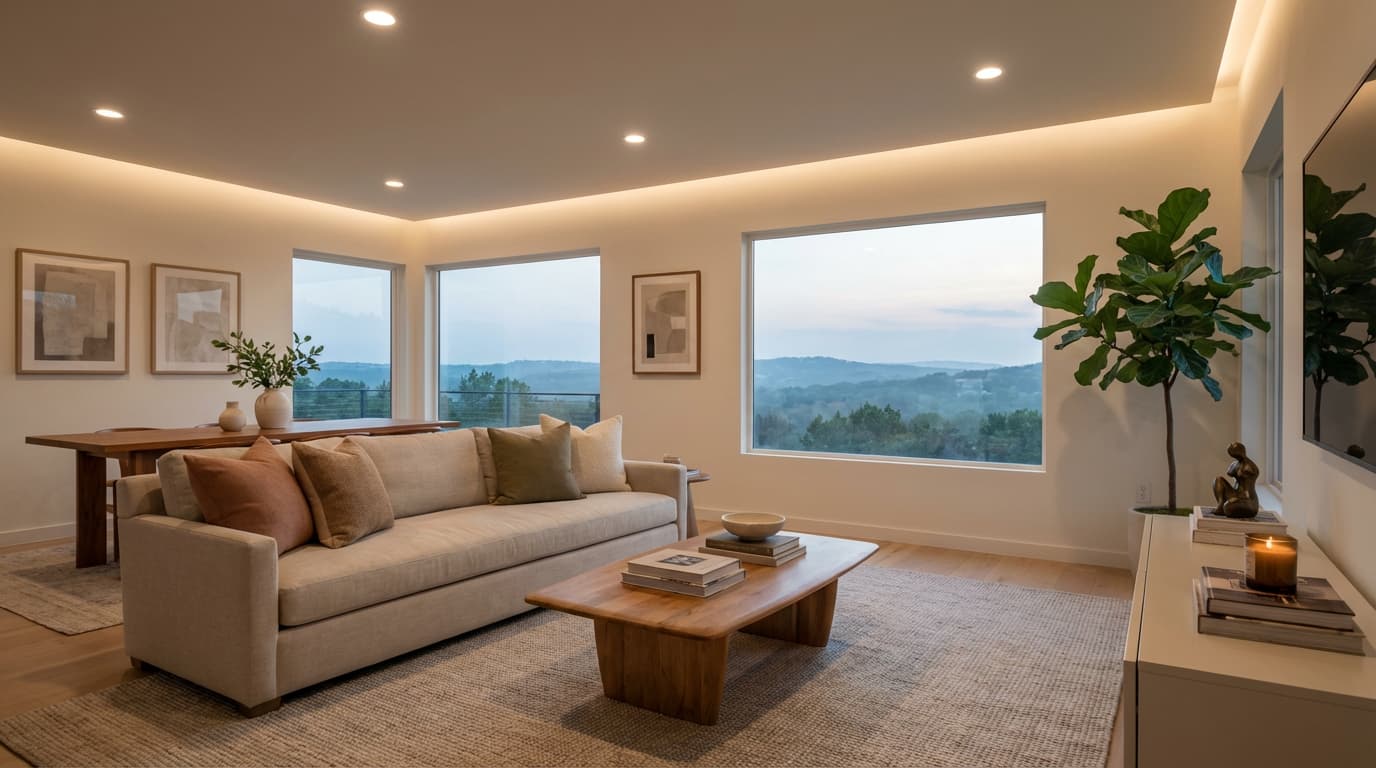
Hidden LED strips installed along ceiling recesses create soft, indirect glow. Especially effective in West Lake Hills and Lakeway homes with higher ceilings.
Indirect wall washing
Perfect for Texas limestone and textured finishes. Wall wash lighting enhances natural stone without creating glare.
Smart tunable systems
Tunable white or RGB smart systems allow your home to shift from energizing daylight to relaxed evening ambiance with one tap.
This flexibility is especially valuable in Austin’s dynamic daylight environment.
Ready to start building your ambient lighting system? Our free Smart Mood Lighting Buyer's Guide breaks down smart bulbs, dimmers, hubs, and accessories by budget — so every purchase serves a purpose.
How bright should ambient lighting be?
Brightness is often misunderstood.
Too dim, and your space feels underpowered.
Too bright, and it feels sterile.
A general rule of thumb:
- Living rooms: 20–30 lumens per square foot
- Kitchens: 30–40 lumens per square foot
- Bedrooms: 10–20 lumens per square foot
- Bathrooms: 30–40 lumens per square foot
Smart dimming is critical. Static brightness rarely works in modern Austin homes.
Color temperature: the hidden mood driver
Color temperature dramatically affects how a room feels.
- 2700K–3000K: warm, relaxing evening tones
- 3500K: balanced and transitional
- 4000K+: bright and energizing
In Central Texas homes with strong natural sunlight, tunable systems allow your artificial lighting to complement daylight instead of competing with it.
Circadian lighting systems can gradually shift throughout the day to support energy, focus, and sleep quality.
Common ambient lighting mistakes Austin homeowners make
Even beautifully designed homes can feel slightly off due to lighting missteps.
The most common mistakes include:
- Relying on one central ceiling fixture
- Installing lights too far apart
- Mixing inconsistent color temperatures
- Skipping dimmers
- Designing lighting without considering daily routines
Lighting should follow lifestyle — not just layout.
How much does ambient lighting cost in Austin?
Cost depends on scope, ceiling access, fixture count, and whether smart controls are integrated.
Typical ranges:
- Single-room upgrade: $2,500–$5,000
- Multi-room redesign: $5,000–$15,000
- Whole-home ambient system: $15,000+
Builder-grade retrofits may cost less, while architectural cove installations may require higher investment.
The key is designing correctly from the start.
Room-by-room ambient lighting strategy
Living room
Combine recessed lighting with indirect cove or wall wash lighting to create balance for entertaining and relaxing.
Bedroom
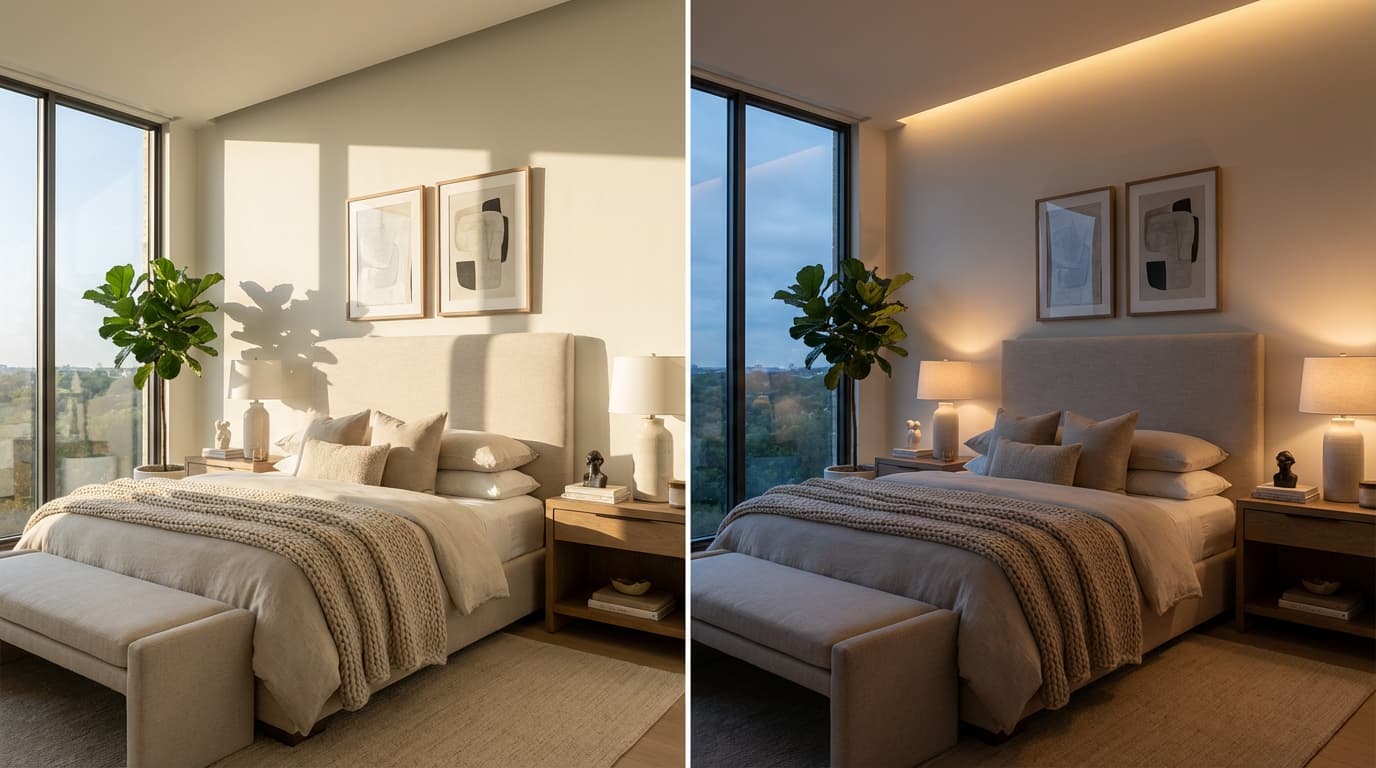
Lower brightness levels and warmer tones support wind-down and sleep.
Kitchen
Evenly distributed ambient lighting prevents shadows across prep areas.
Bathroom
Balanced overhead lighting eliminates harsh mirror shadows and creates spa-like comfort.
Outdoor spaces
Subtle ambient landscape lighting enhances evening entertaining while maintaining visual comfort.
Smart ambient lighting vs traditional lighting
Traditional lighting is static. It turns on. It turns off.
Smart ambient lighting adapts.
With scheduling, scene presets, and dimming automation, your home can:
- Gradually brighten in the morning
- Adjust during overcast afternoons
- Shift to warm wind-down mode at night
In tech-forward Austin households, this flexibility is becoming standard.
Ambient lighting and wellness
Lighting affects more than aesthetics.
Research shows that properly timed light exposure can:
- Improve sleep quality
- Support circadian rhythms
- Reduce evening eye strain
- Enhance daytime productivity
When lighting aligns with your biological rhythm, your home feels better — not just brighter.
Frequently asked questions about ambient lighting Austin
What is ambient lighting and why does it matter in Austin homes?
Ambient lighting is the base layer of illumination that provides overall visibility and sets the mood of a room. In Austin homes with strong natural sunlight and open layouts, intentional ambient lighting ensures smooth transitions from day to night.
What type of ambient lighting works best for modern Austin homes?
Recessed downlights, hidden LED cove lighting, and smart dimmable systems tend to work best because they provide even illumination and flexible control.
How much does ambient lighting installation cost in Austin?
Single-room upgrades often start in the low thousands, while whole-home projects vary depending on customization and automation depth.
Can smart ambient lighting improve mood and sleep?
Yes. Tunable smart lighting systems can adjust brightness and color temperature throughout the day to support circadian rhythms and reduce eye strain.
Final thoughts: start with the glow
If your home feels slightly off in the evening but you can’t explain why, ambient lighting is often the missing layer.
Before replacing furniture or repainting walls, evaluate your base illumination.
Is it even? Adjustable? Designed around how you live?
If not, that’s your opportunity.
At Radiant Spaces, we design ambient lighting Austin homeowners rely on to create spaces that feel just as good at 7am as they do at 10pm.
If you’re ready to transform your space, book your Austin lighting design consultation and let’s curate the perfect glow for your home.