
The Foundation of Intentional, Comfortable Interiors
If a home feels flat, harsh, or uninviting at night, the issue usually isn’t the fixture.
It’s the lack of layers.
Layered lighting design is the foundation of comfortable, functional interiors. Without it, even expensive fixtures can produce glare, uneven brightness, and spaces that feel sterile after sunset.
In Austin homes — with open floor plans, high ceilings, and strong natural light — layered lighting isn’t optional. It’s essential.
What Is Layered Lighting?
Layered lighting combines three types of light:
• Ambient lighting (general illumination)
• Task lighting (focused function)
• Accent lighting (depth and visual interest)
When these layers work together, rooms feel dynamic and adaptable. When they don’t, spaces rely too heavily on overhead fixtures — often creating glare and visual fatigue.
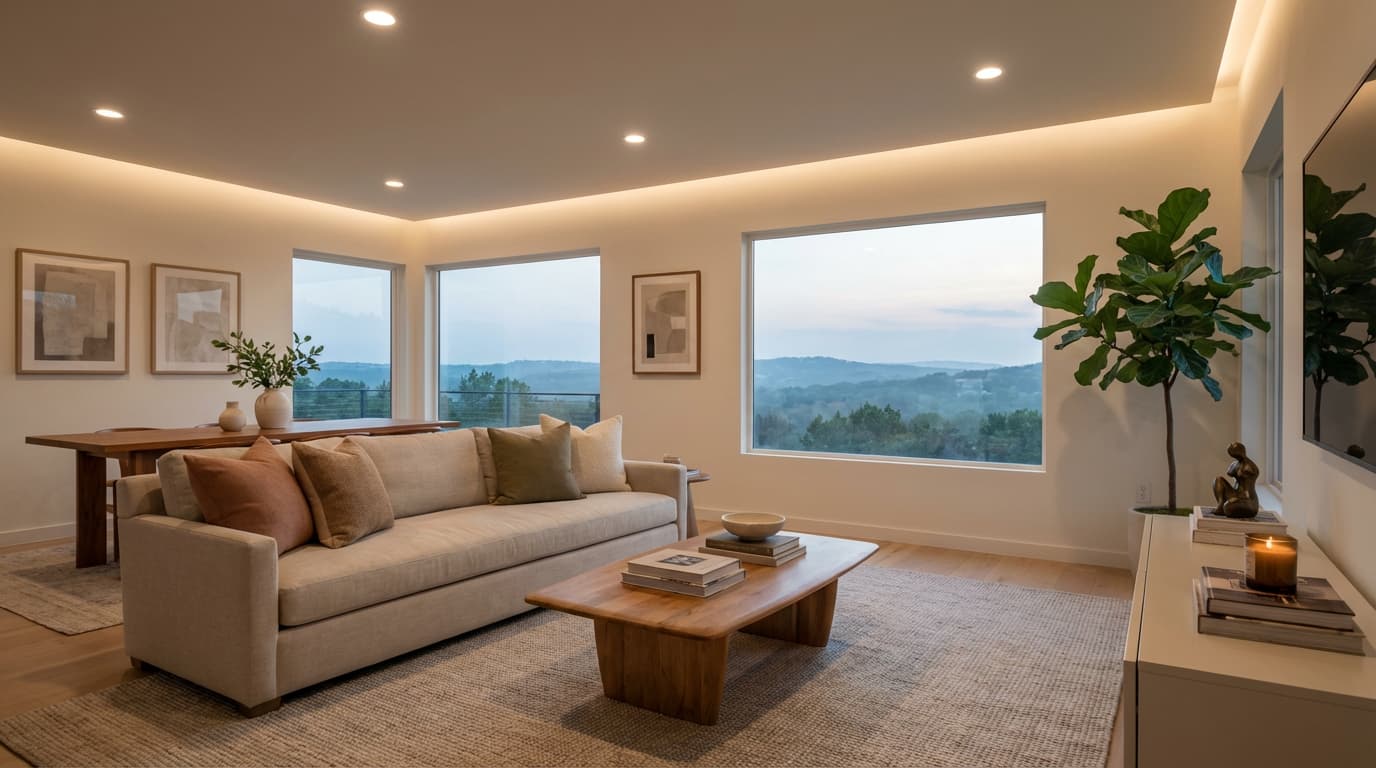
Ambient Lighting: The Base Layer
Ambient lighting provides overall brightness.
Examples include:
• Recessed ceiling lights
• Flush-mount fixtures
• Indirect cove lighting
• Large pendant fixtures
In many Austin homes, recessed lights are installed in uniform grid patterns. While this provides coverage, it often produces over-illumination and flat visual depth.
Proper ambient lighting should feel balanced — not blinding.
It sets the tone for the room, but it should never do all the work.
Task Lighting: Functional Clarity
Task lighting supports specific activities:
• Under-cabinet lighting in kitchens
• Vanity lighting in bathrooms
• Desk lamps in offices
• Reading lights in bedrooms
In layered design, task lighting prevents you from raising the entire room’s brightness just to complete one activity.
In Austin kitchens with large islands, under-cabinet lighting can provide morning clarity without flooding the entire room with harsh overhead light.
This improves comfort and reduces glare — especially in homes with reflective surfaces like quartz countertops.
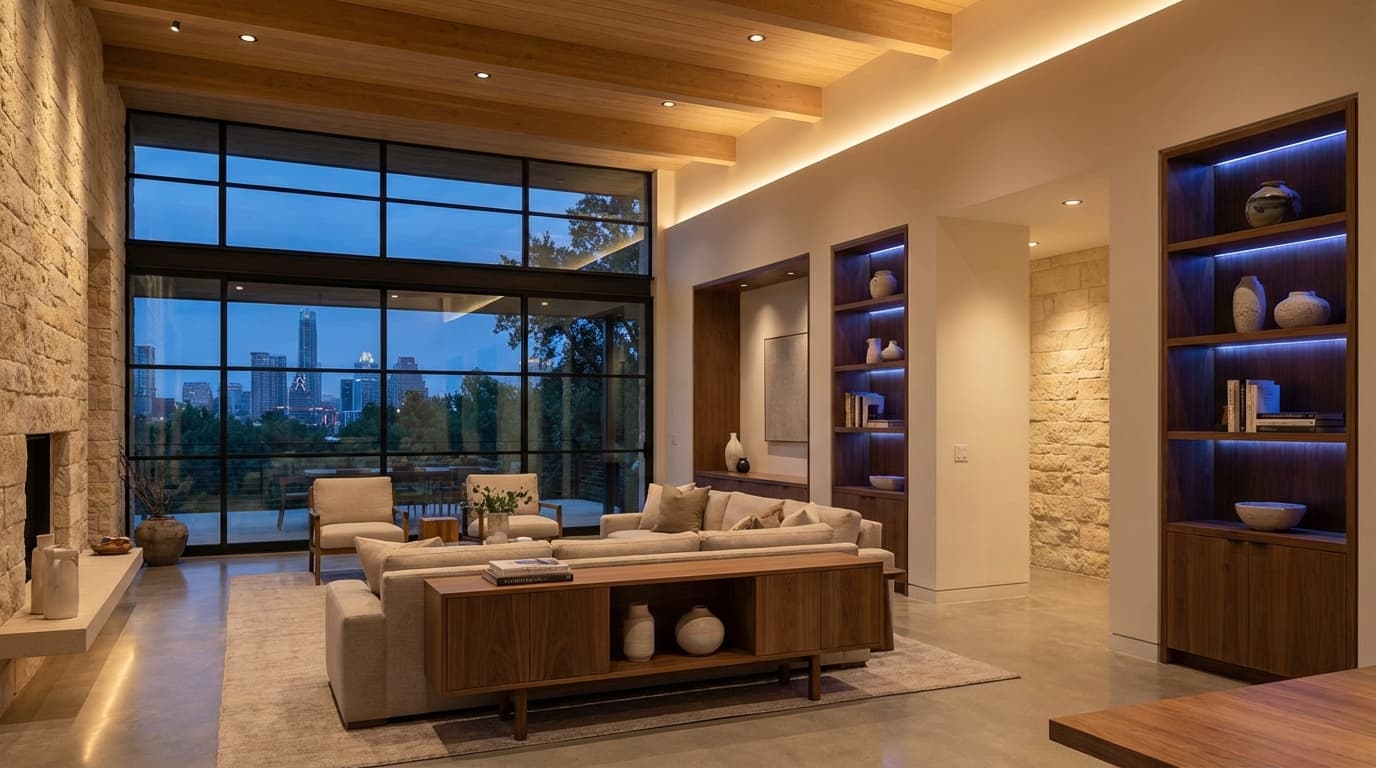
Accent Lighting: Depth and Atmosphere
Accent lighting is where design comes alive.
It highlights:
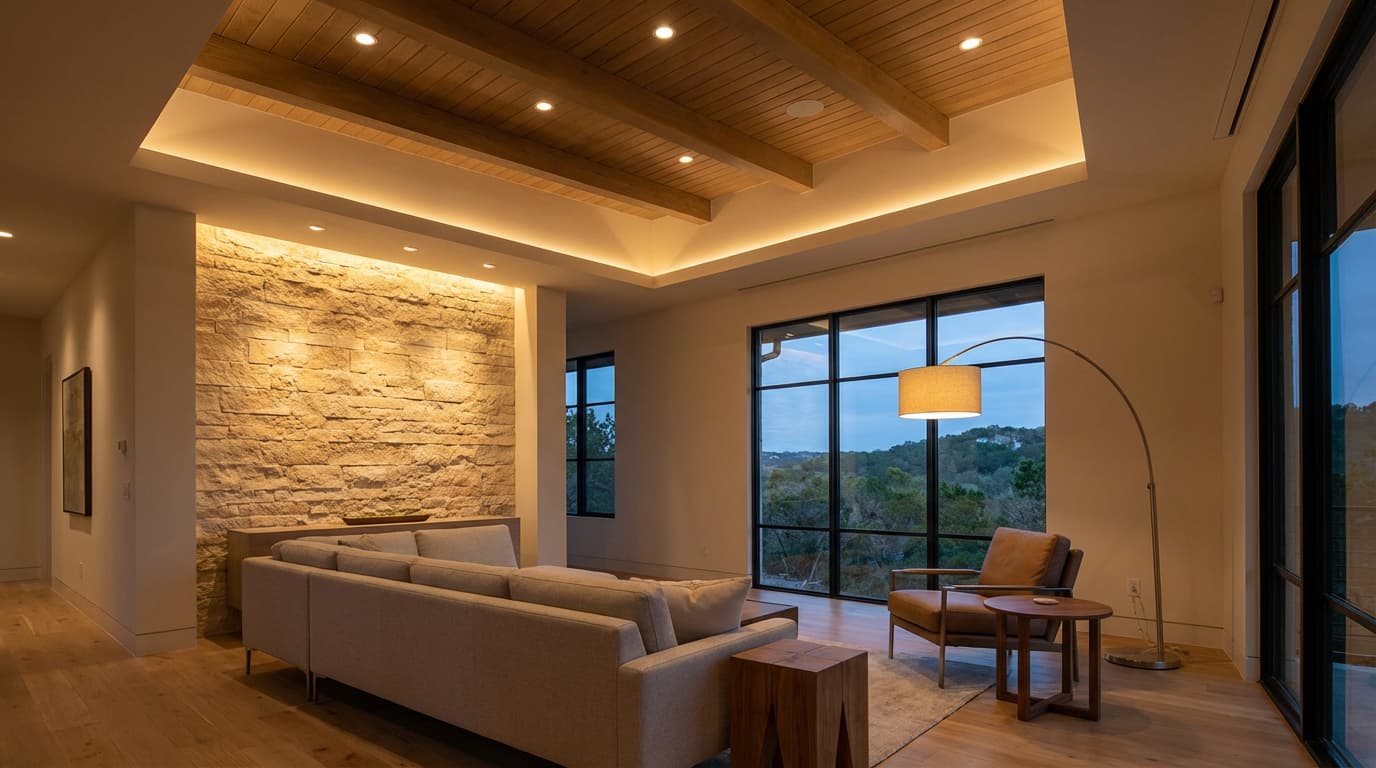
• Architectural features
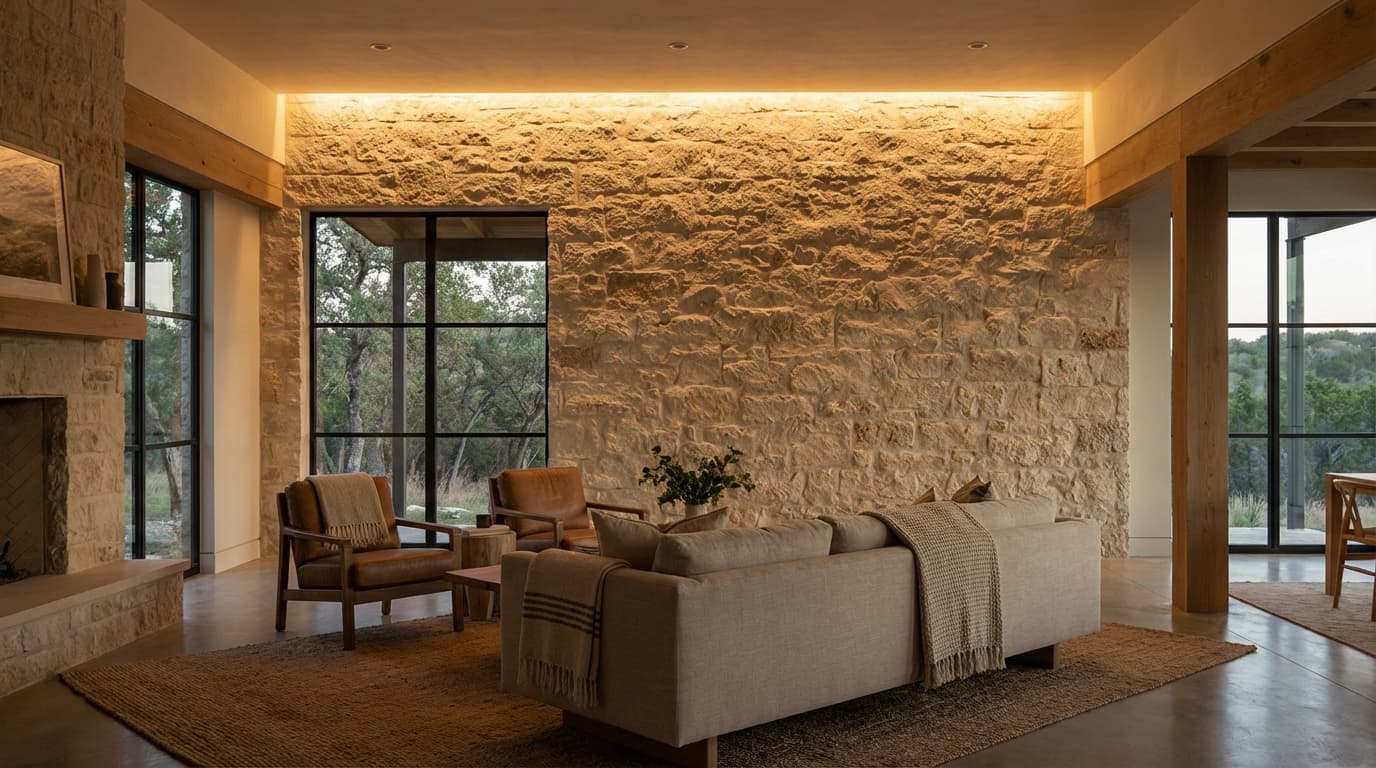
• Textured walls
• Artwork
• Built-ins
• Fireplaces
• Outdoor landscaping
Without accent lighting, a room can feel two-dimensional at night.
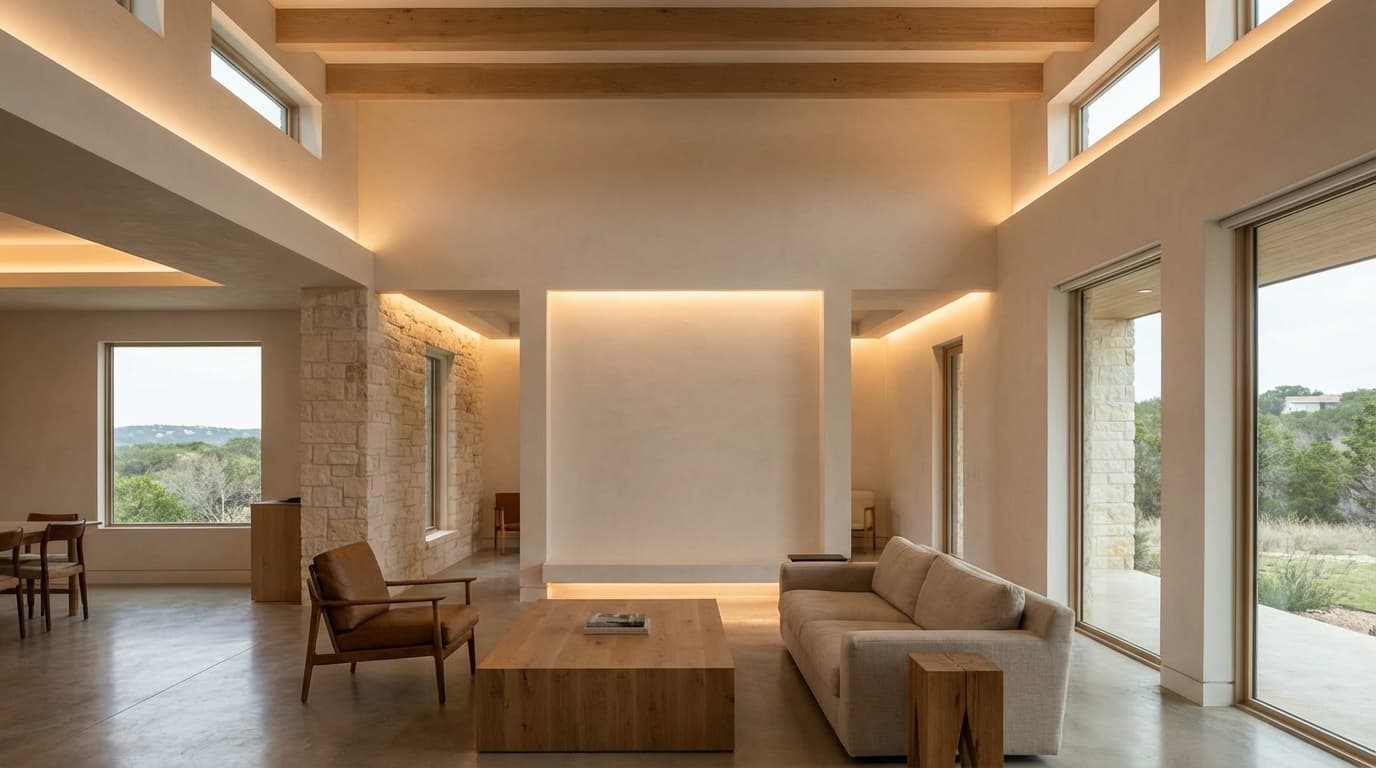
In homes with high ceilings — common in Westlake, Lakeway, and newer Austin builds — accent lighting helps visually “lower” the space and create intimacy.
Wall washing, grazing, and directional lighting all contribute to depth.
Why Layered Lighting Matters More in Austin
Austin architecture presents unique challenges.
Strong Natural Light During the Day
Large windows provide incredible daylight — but once the sun sets, homes can feel dramatically darker than expected.
Without layered lighting, evening environments often rely solely on recessed lights, creating an abrupt and uncomfortable shift.
Open Floor Plans
Living, dining, and kitchen areas frequently blend into one large space.
Without lighting layers, the entire zone must share a single brightness level — which rarely supports every activity happening simultaneously.
Layering allows zones within open spaces to function independently.
Entertaining Culture
Austin homes are often designed for gathering.
Layered lighting supports transitions from bright daytime hosting to relaxed evening conversations to subtle late-night ambiance.
This flexibility is impossible with single-source lighting.
Common Layered Lighting Mistakes
Even well-designed homes fall into these traps.
Too Many Recessed Lights
More fixtures do not equal better lighting. Overhead grids create uniform brightness but eliminate visual depth.
No Dimming Control
Without dimmers, layers can’t adapt. Lighting should shift throughout the day.
Ignoring Vertical Surfaces
Lighting walls increases perceived brightness without increasing glare.
Decorative Fixtures as the Only Accent
Statement fixtures are not a substitute for layered architectural lighting.
How Layered Lighting Supports Circadian Design
Layered lighting is the backbone of circadian lighting systems.
You cannot properly adjust brightness and color temperature in a room that only has one lighting source.
Circadian transitions require:
• Ambient lighting that brightens in the morning
• Accent lighting that warms in the evening
• Task lighting that adjusts based on activity
The key to these transitions is choosing the right color temperature for each layer. Our Color Temperature Cheat Sheet shows exactly which Kelvin range works for every room and time of day.
Without layers, circadian control becomes artificial and uncomfortable.
If you haven’t read our guide on circadian lighting for Austin homes, you can find it here: Read on ->
Layered Lighting by Room
Living Room
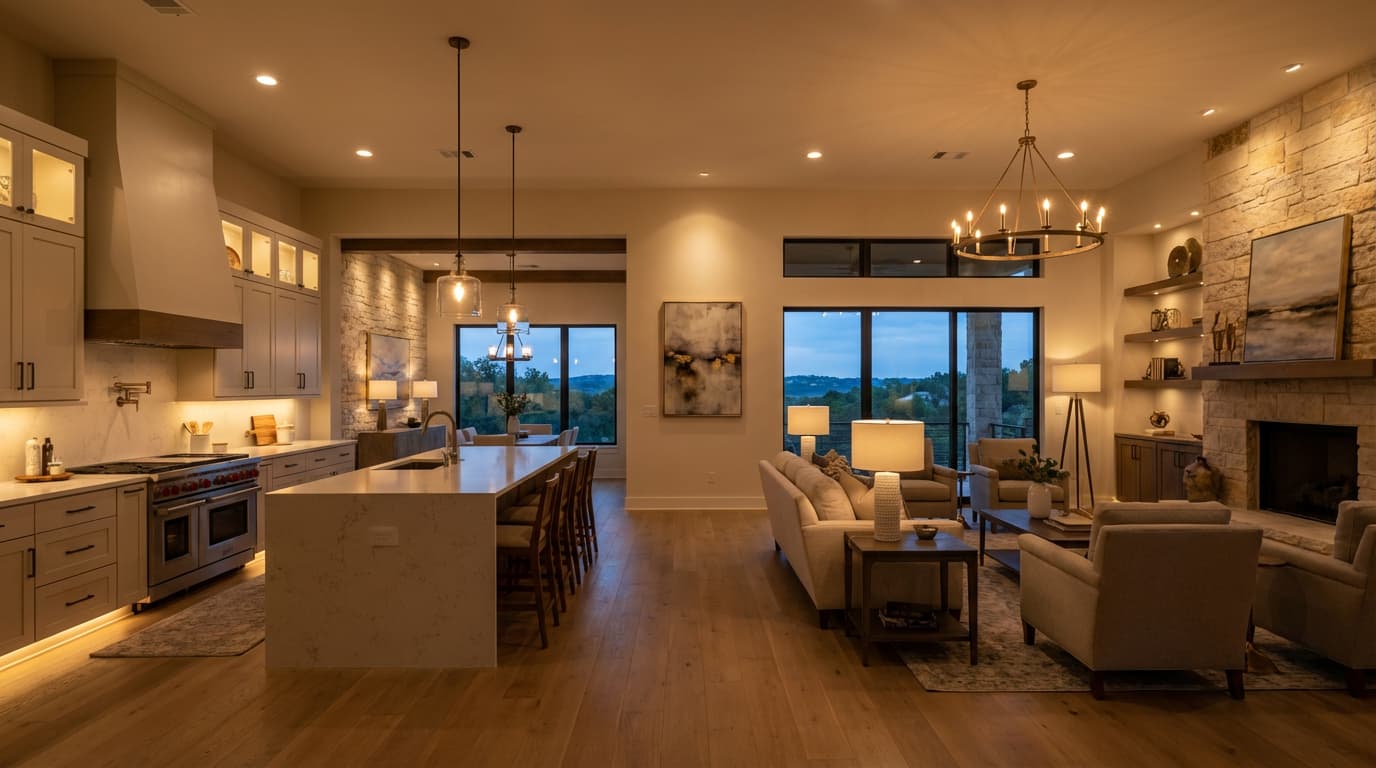
Combine recessed ambient lighting, wall washers, table lamps, and floor lamps.
Evening scenes should rely more on accent lighting and less on overhead light.
Kitchen
Layer recessed lights with under-cabinet task lighting and island pendants.
Toe-kick lighting can provide subtle nighttime navigation.
Bedroom
Use soft overhead ambient lighting combined with bedside lamps and indirect lighting when possible.
Avoid cool light in the evening.
Bathroom
Layer mirror lighting with overhead ambient fixtures.
Include low-level night lighting for late hours.
Outdoor Spaces
Layered lighting applies outside as well.
Combine path lighting, tree uplighting, patio fixtures, and architectural washes to prevent harsh spotlight effects and support comfortable evening gatherings.
Can Layered Lighting Be Added to an Existing Home?
In many cases, yes.
Layering does not always require renovation.
Improvements may include:
• Adding wall-mounted fixtures
• Installing under-cabinet lighting
• Integrating smart dimmers
• Introducing indirect lighting elements
The goal is not more light — it’s better-balanced light.
Ready to put layered lighting into practice? Download our free Lighting Consultation Checklist — it walks you through identifying priority rooms, describing how each space should feel, and gathering the details your designer needs to create a plan that fits your home.
Designing Layered Lighting Intentionally
Layered lighting is not about complexity.
It’s about understanding:
• How the room is used
• When it’s used
• Who uses it
• What mood is desired at different times of day
In Austin homes, thoughtful layering transforms harsh, flat interiors into adaptable environments that feel comfortable from morning through night.
If your home feels too bright at night or uneven in the evening, the solution may not be new fixtures — it may be new layers.
If you’re considering a more intentional lighting approach, you can learn more about our lighting design services here: Learn more ->
Or start with a consultation to clarify the right approach for your space:
Get started ->